Trekking in Malaysian Jungle: Essential Advice
Orangutans swinging through the canopy, pygmy elephants along riverbanks, carnivorous plants lining the trails... Malaysian jungles rank among the most vibrant and oldest on the planet. This guide gives you the keys to exploring them safely, whether in Peninsular Malaisie or Borneo.
Orangutans swinging through the canopy, pygmy elephants along riverbanks, carnivorous plants lining the trails... Malaysian jungles rank among the most vibrant and oldest on the planet. This guide gives you the keys to exploring them safely, whether in Peninsular Malaisie or Borneo.
Choosing the Right Destination Based on Your Level
Before mapping your itinerary, keep in mind that physical difficulty varies considerably from one Malaysian jungle to another. Honestly assess your fitness level and tropical experience before selecting your destination.
Peninsular Malaisie is ideal for beginners. Trails are well-marked, guides are plentiful, and infrastructure is solid. It's the perfect entry point for your first immersion.
Borneo (Sarawak and Sabah) offers experiences ranging from beginner to advanced, depending on the region and activities.
The Best Time to Travel
Peninsular Malaisie and Borneo have distinct climate cycles that are crucial to respect to avoid impassable trails.
- Peninsular Malaisie: Choose March through September. Avoid the East Coast between November and February, when the monsoon is particularly intense and can lead to the closure of many jungle access points.
- Borneo: The ideal window runs from March to October. The Northeast Monsoon (November to February) makes terrain extremely muddy and significantly increases the risk of flash floods.
Note: In the jungle, humidity is constant (often above 80%). Don't confuse "dry season" with an absence of rain. Always expect showers, but they'll be briefer and less disruptive than during the rainy season.
Equipping Yourself Properly
The jungle tolerates no improvisation: your comfort depends entirely on how well you've packed. Here's what's essential.
Clothing
- Leech-resistant socks
- Long, lightweight, breathable trousers (protection against leeches and insects)
- Long-sleeved t-shirts in quick-drying synthetic fabric
- A lightweight waterproof jacket, essential for sudden downpours
- Moisture-wicking technical underwear
Footwear
Choose high-ankle hiking boots with lugged soles. Flip-flops and regular sneakers are absolutely forbidden on muddy trails.
Backpack
A 30 to 50-liter pack is sufficient for multi-day treks. Place everything in waterproof bags inside, as moisture is ever-present.
Essential Items for Your Pack
Beyond clothing, certain accessories are non-negotiable in Malaysian jungle.
- DEET-based insect repellent (minimum 50% concentration if tolerated)
- Headlamp with spare batteries
- Water purifier or purification tablets
- First-aid kit with painkillers, bandages, and antiseptic cream
Understanding the Real Dangers of the Jungle
Many travelers overestimate large predators and underestimate small hazards. Reality is often the opposite.
Leeches are the hiker's number-one enemy. They don't transmit serious disease, but their bites bleed for a long time. Check your ankles and wrists every hour.
Mosquitoes pose a real risk of dengue and malaria in certain areas. Repellent (applied every 4 hours) and covering clothing remain your best protection.
Disorientation is the leading cause of serious jungle accidents. Trails fade quickly under vegetation, and getting lost can happen within minutes.
Snakes are present but elusive. In case of a bite, immobilize the limb and reach a doctor immediately.
Do You Really Need a Guide?
In national parks like Taman Negara, certain zones are legally inaccessible without a guide. For treks of more than two days in deep forest, a guide is essential regardless of your experience level.
A local guide knows the trails, speaks the languages of local communities, and recognizes danger signs. His expertise is worth infinitely more than his fee.
Staying Hydrated and Nourished in the Forest
Heat combined with humidity causes rapid dehydration, often without noticeable thirst. Drink at least 3 to 4 liters of water per day while active.
River water in Malaysian jungle may appear clear but can harbor parasites. Always filter or purify before consuming.
For multi-day treks, prioritize compact, energy-dense foods: nuts, cereal bars, pre-cooked packaged rice. Avoid foods that ferment quickly in heat.
Respecting Fauna and Flora
Malaysian jungle is a fragile ecosystem. Your behavior directly impacts its preservation.
- Never feed wild animals, including monkeys.
- Don't pick any plants, even if they seem common.
- Never leave marked trails without a guide.
- Take all your garbage with you, including organic waste.
- Keep noise levels low to avoid disturbing wildlife.
Borneo's orangutans are particularly sensitive to human contact. Always maintain a distance of at least 10 meters.
Sleeping in the Jungle
Several accommodation options may be available in parks. Ecolodges offer reasonable comfort while immersed in the forest. They typically include meals and guide access. This is the best option for first-time visitors.
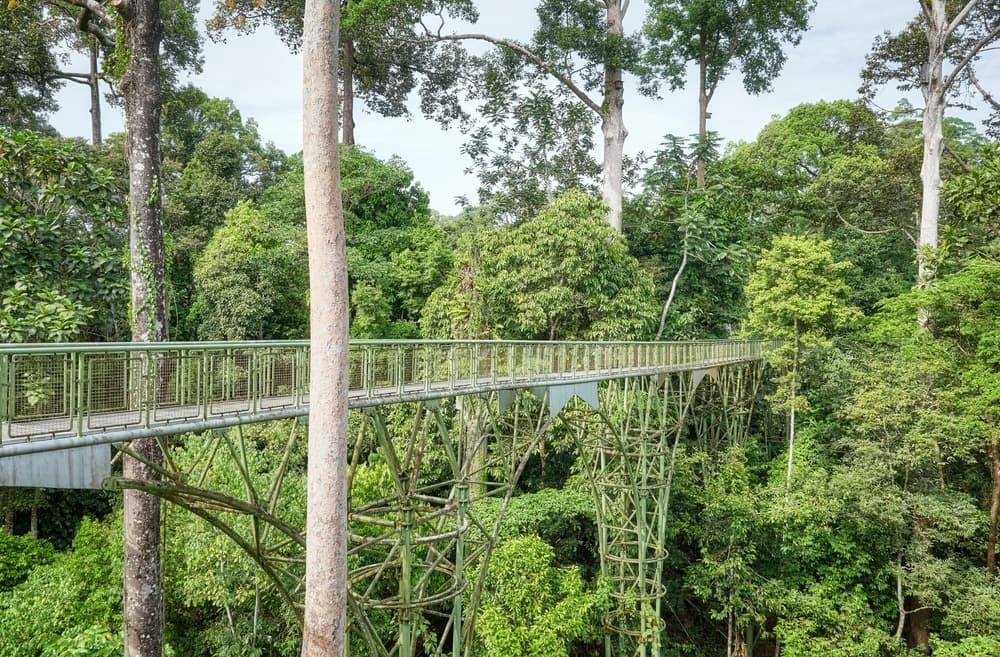
Camping in the jungle is possible in certain areas with permission. Ensure your tent has an integrated mosquito net or insect protection. In many forest camps, overnight stays are on wooden platforms built above ground to reduce humidity and insects.
Stays with the Dayak represent a rare cultural and human experience, and must be arranged exclusively through a reputable local agency.
Health and Vaccinations Before Departure
Consult a tropical medicine specialist at least six weeks before departure. Some vaccines or preventive treatments require an administration period. Recommended vaccinations include hepatitis A and typhoid. Depending on the area visited, a malaria prevention treatment may be prescribed, particularly for remote regions of Borneo.
Purchase travel insurance that explicitly covers medical evacuations from isolated areas. This is a crucial detail often overlooked in standard policies.
Final Tips
- Always share your detailed itinerary with a trusted person outside the forest. Give them a time limit beyond which they should alert rescue services.
- Fully charge all electronic devices before each day of trekking. In dense forest, portable solar panels are ineffective under the canopy.