Dress Code in Mosques and Temples in Malaysia
Malaysia is a country where Islam, Hinduism, Buddhism, Taoism and Christianity coexist peacefully. Visiting its mosques, Hindu or Buddhist temples is a unique experience,
Malaysia is a country where Islam, Hinduism, Buddhism, Taoism and Christianity coexist peacefully. Visiting its mosques, Hindu or Buddhist temples is a unique experience, provided you respect certain rules. This guide prepares you to adopt the right behaviors so that each visit unfolds with serenity.
In Mosques
Dress code for men
Long pants are generally required. Shorts are rarely accepted, even when they cover the knees. A short-sleeved shirt is tolerated, but long sleeves are preferable. Tank tops, torn clothing or garments bearing provocative messages are absolutely prohibited.
In large tourist mosques, a robe is lent free of charge at the entrance if your attire is not appropriate. This is notably the case at Masjid Jamek in Kuala Lumpur.
Dress code for women
The requirements are stricter. The body must be entirely covered: arms (long sleeves), legs down to the ankles, neckline and hair. A scarf to cover the head is mandatory.
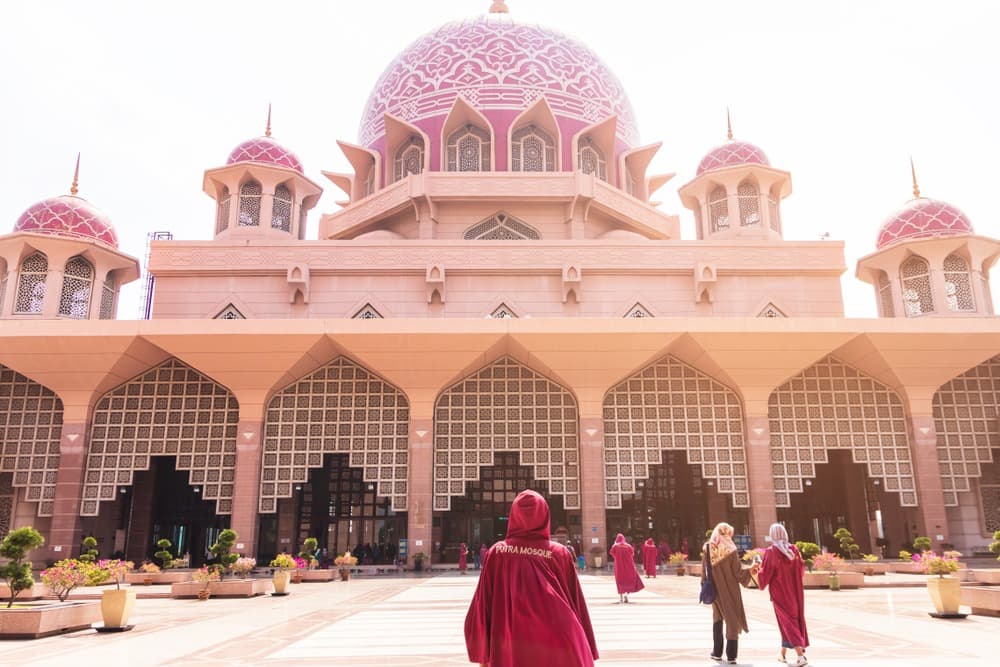
Most large mosques also provide a long, loose-fitting robe as well as a hooded scarf, often in pink, purple or beige. These garments are worn over your regular clothing.
Rules to observe inside
Remove your shoes at the entrance and place them on the shelves provided for this purpose. Remain silent and avoid any display of affection. Do not take photographs during prayers and do not touch anything without prior permission.
Hours to know
Tourist visits take place outside prayer times. At Masjid Jamek, for example, the usual time slots are 10:00 AM to 12:30 PM and 2:30 PM to 4:30 PM. During Ramadan or holiday periods, access may be restricted. Always check the hours in advance.
In Hindu Temples
What must be covered
Shoulders and knees must be covered, for both men and women. Tank tops, shorts rising above the knee, mini-skirts, short tops or transparent clothing are prohibited.
For women, a long skirt or loose pants with a three-quarter or long-sleeved top is ideal. A shawl draped over the shoulders may suffice if the top is lightweight. For men, pants or shorts clearly covering the knees, paired with a shirt or polo, works perfectly.
The sarong, your best ally
At Batu Caves, one of the country's most visited Hindu sites, a sarong is available for rent or purchase at the entrance for around 15 MYR. It ties around the waist or over the shoulders as needed.
It is advisable to bring your own sarong or scarf in your travel bag. It is lightweight, practical and more hygienic. This also allows you to avoid an additional expense.
Expected behavior
Remove your shoes before entering the inner sanctuaries or prayer caves. Shelves are also available at the entrance. You may keep your socks on for added comfort.
Inside, lower your voice. Avoid pointing your finger at altars or sacred statues. This is considered disrespectful. Instead, use a closed fist (right hand), thumb extended in the desired direction. Do not touch sacred objects either. And if you wish to take photographs, always ask for permission.
In Buddhist and Chinese Temples
A more relaxed code, but not non-existent
Buddhist temples such as Kek Lok Si in Penang or Thean Hou Temple in Kuala Lumpur apply a less strict dress code. There is generally no inspection at the entrance, but modesty remains strongly recommended, especially in prayer halls.
Covering the shoulders and knees remains the basic rule. A short-sleeved t-shirt and pants or a midi-length skirt are perfectly adequate. Very short shorts, tank tops and form-fitting outfits should still be avoided.
What to do inside
Remove your shoes before entering buildings or prayer halls. Opt for shoes that are easy to remove, such as sandals.
Inside, silence your phone, speak softly and be mindful of people meditating. Photography is often permitted, but ask permission before photographing near altars or during prayers.
Practical Tips for All Visits
Your essential equipment
Always pack a lightweight versatile scarf, a lightweight sarong and shoes that are easy to remove. These three items will help you navigate most situations, regardless of the type of place of worship.
In Malaysia's heat, which ranges between 30 and 35 degrees Celsius, opt for loose, light-colored cotton or linen. These breathable fabrics will allow you to be both modest and comfortable.
Universal rules never to forget
In any place of worship, whether Islamic, Hindu or Buddhist, always remove your shoes at the entrance. Maintain a calm tone and discreet demeanor. Show no displays of affection. Never point your finger. Do not touch sacred objects or monks, particularly if you are a woman.
Avoid stepping on doorways, which may be considered symbolic in some places of worship. Simply step over them as you enter.