What Currency in Malaysia and How to Pay?
Before traveling to Malaysia, it's helpful to understand how payments work in the country. Local currency, ATMs, bank cards, or mobile apps… Several solutions exist to settle your expenses on the ground.
Before traveling to Malaysia, it's helpful to understand how payments work in the country. Local currency, ATMs, bank cards, or mobile apps… Several solutions exist to settle your expenses on the ground.
In this guide, you'll discover what currency is used in Malaysia, how to exchange your money, which payment methods are accepted, and what tips to follow to avoid unnecessary fees.
The Ringgit, Malaysia's Currency
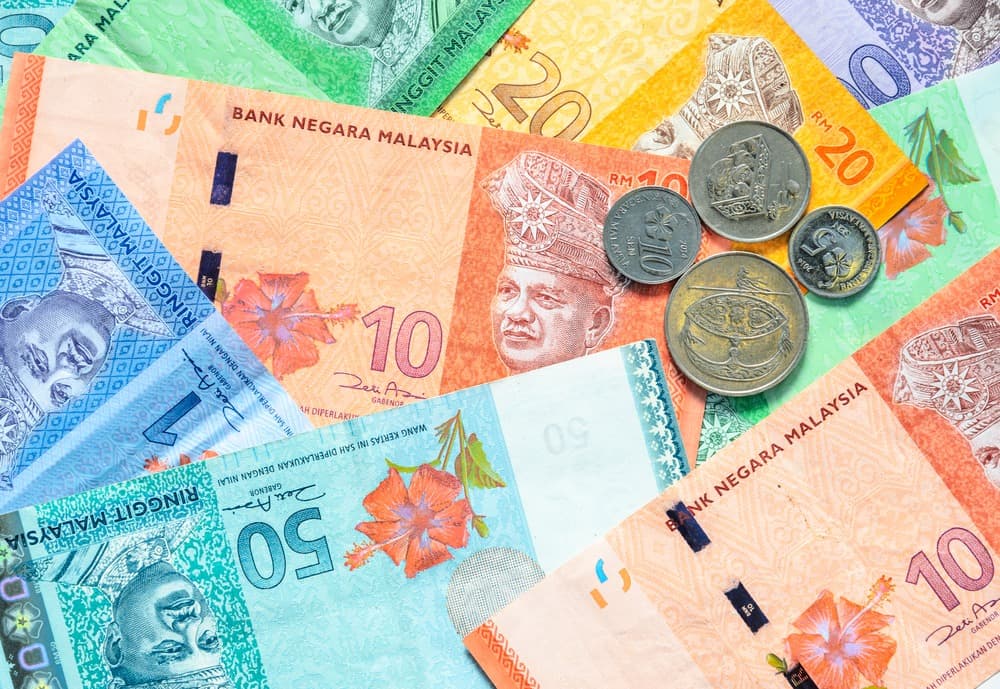
Malaysia's official currency is the Malaysian ringgit, abbreviated as RM or MYR. It is divided into 100 sen. You'll find coins of 1, 5, 10, 20, and 50 sen, as well as banknotes of 1, 5, 10, 20, 50, and 100 RM. In 2025, one euro is equivalent to approximately 4.50 RM.
Note: Malaysians sometimes use the word "dollar" to refer to the ringgit, in reference to the former national currency. If in doubt, always ask whether they mean US dollars or ringgits.
Exchanging Money in Malaysia
Money Changers
To obtain Malaysian ringgit in cash, money changers are your best option. They typically offer better rates than banks, charge no commission, and process transactions quickly.
They are readily available in all tourist areas, shopping centers, and throughout Kuala Lumpur, particularly in the Chinese and Indian quarters. Most are open 7 days a week.
Rates vary slightly from one money changer to another and from city to city. Take time to compare before exchanging.
Helpful Tip: Ask for small denominations if you plan to venture away from cities. In rural areas, it's often impossible to get change on a note larger than 10 RM.
Airport Exchange
Airport money changers often offer less favorable rates. Upon arrival, exchange only what you need to reach the city, then find a more competitive money changer later. On departure, convert your remaining ringgits in the city rather than at the airport.
Banks
Not all Malaysian banks offer exchange services, and those that do (such as Maybank, CIMB, or RHB) often charge a commission of around 10 RM per transaction. They remain a backup solution. Money changers are faster and more cost-effective.
Withdrawing Cash at ATMs in Malaysia
Automated teller machines (ATMs) are easy to find throughout Malaysia. They're available in major cities like Kuala Lumpur, Penang, and Johor Bahru, as well as at airports, shopping centers, and even in smaller towns.
The vast majority accept Visa and Mastercard. International networks such as Cirrus, Maestro, and Plus are also well represented.
Withdrawal limits are often set at 1,000 or 1,500 RM per transaction (approximately €220 to €330). Fees apply to each withdrawal, typically between 10 and 15 RM per transaction. ATMs from major local banks (Maybank, CIMB, RHB) are often more reliable and less costly than smaller independent machines.
Important Tip: Before you leave, be sure to notify your bank of the countries you'll be visiting and the dates of your stay. Without this precaution, your card may be blocked at your first withdrawal due to suspected fraud. This is an increasingly common situation.
Paying by Bank Card in Malaysia
Where Cards Are Accepted
Credit and debit cards are widely accepted in Malaysia, especially in urban areas. They work without issue in the vast majority of hotels, restaurants, shops, and gas stations. Some smaller hotels also follow this practice, though it's not universal.
Visa and Mastercard are the most widespread. American Express and Diners Card are also accepted at certain merchants.
Places Where Cash Remains Essential
At guesthouses, local markets, small shops, and rural areas, cash is still the predominant payment method. It's therefore advisable to always carry some liquidity with you.
Fees to Anticipate
Paying with a French bank card in Malaysia can incur currency conversion fees and international commissions, typically between 1 and 3% per transaction.
To avoid these additional costs, two options are worth considering: the multi-currency card and the no-fee exchange card. The former allows you to hold ringgits and settle purchases without conversion fees. The latter applies the real interbank rate directly, with no markup whatsoever.
Mobile Payment in Malaysia
Malaysia is one of Southeast Asia's most advanced countries in mobile payment technology. In cities, contactless payments have become very common in shops, restaurants, and public transport.
The most popular applications are Touch 'n Go eWallet, GrabPay, and Boost. They allow you to pay simply by scanning a QR code. Apple Pay and Google Pay are also accepted at certain merchants.
Tourists can use these applications by downloading them, registering with a local SIM card, and then linking a foreign bank card to top up their balance.
Local payment apps regularly offer promotions and discounts to their users, which can help you save on everyday purchases.
Importing Foreign Currency into Malaysia
Malaysia enforces regulations on the transport of foreign currency. If you carry the equivalent of more than 30,000 RM in local or foreign currency, or more than 10,000 USD, you are required to declare it to Malaysian customs upon your entry or exit from the country.
