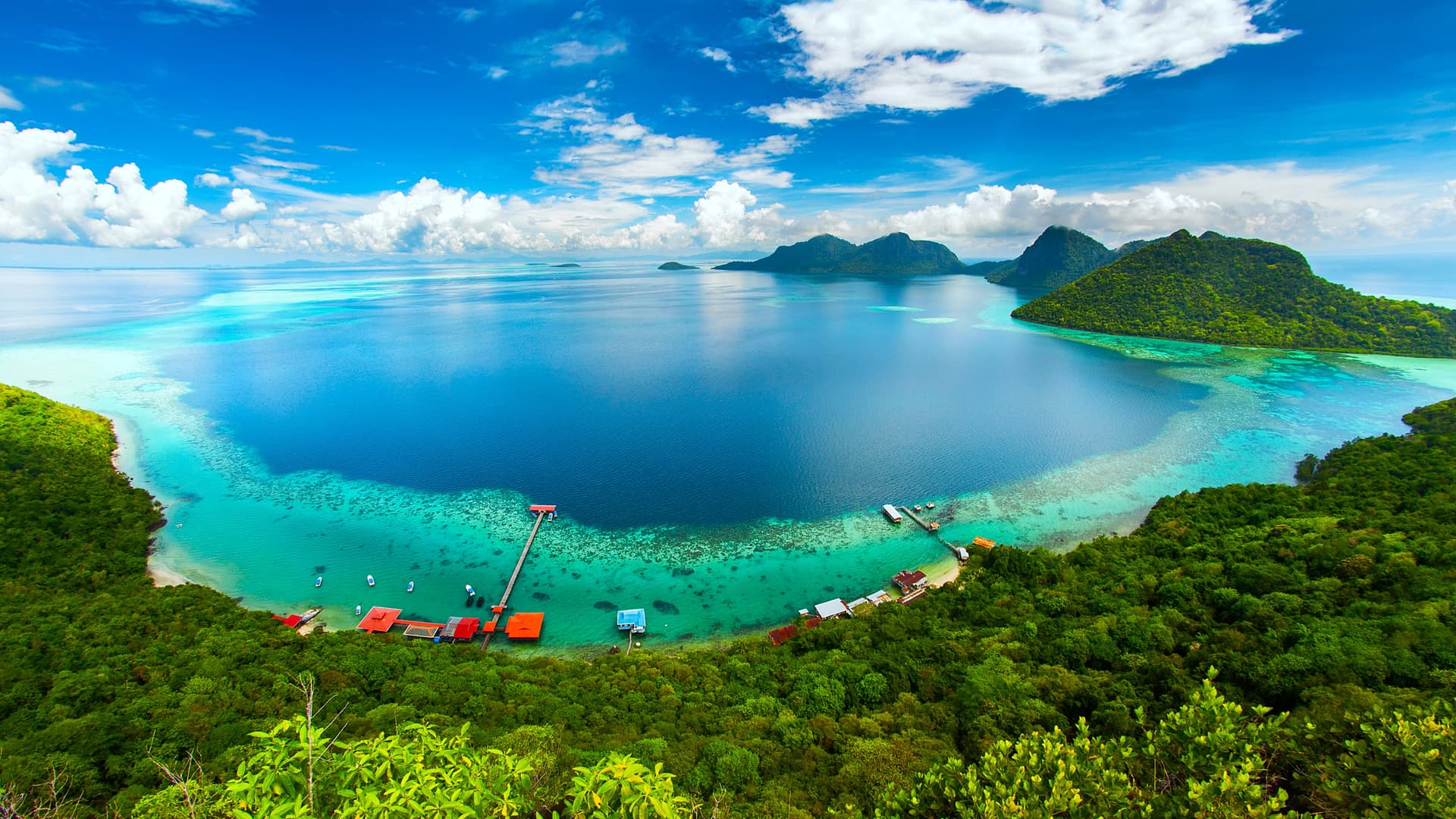
Islands and Beaches
Three archipelagos, two coasts with inverted calendars and a world-class diving site at Sipadan: Malaysia's beach experience begins with understanding the map and the season.
Malaysia doesn't have one coast—it has two, each operating on an inverted calendar. Our English-speaking team, based in the capital, organizes departures to three island groups with almost nothing in common: Langkawi in the northwest, in the Andaman Sea; the Perhentian archipelago and Tioman Island on the east coast, in the South China Sea; and finally Sipadan, off Semporna, in the Celebes Sea in Sabah. Understanding this geography is the first step before committing to dates.
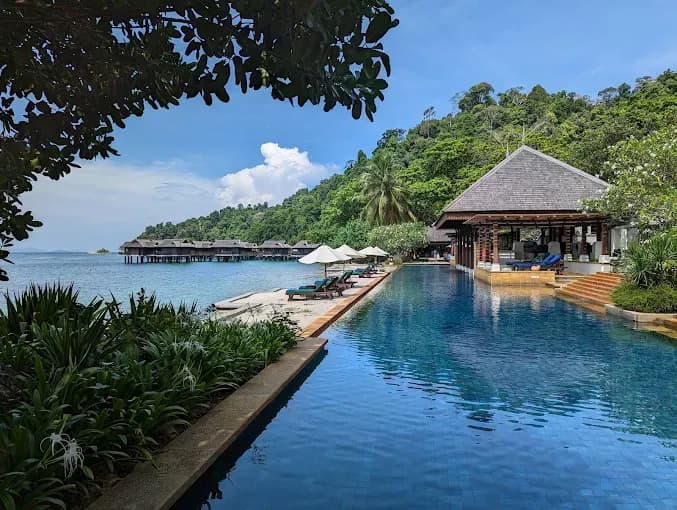
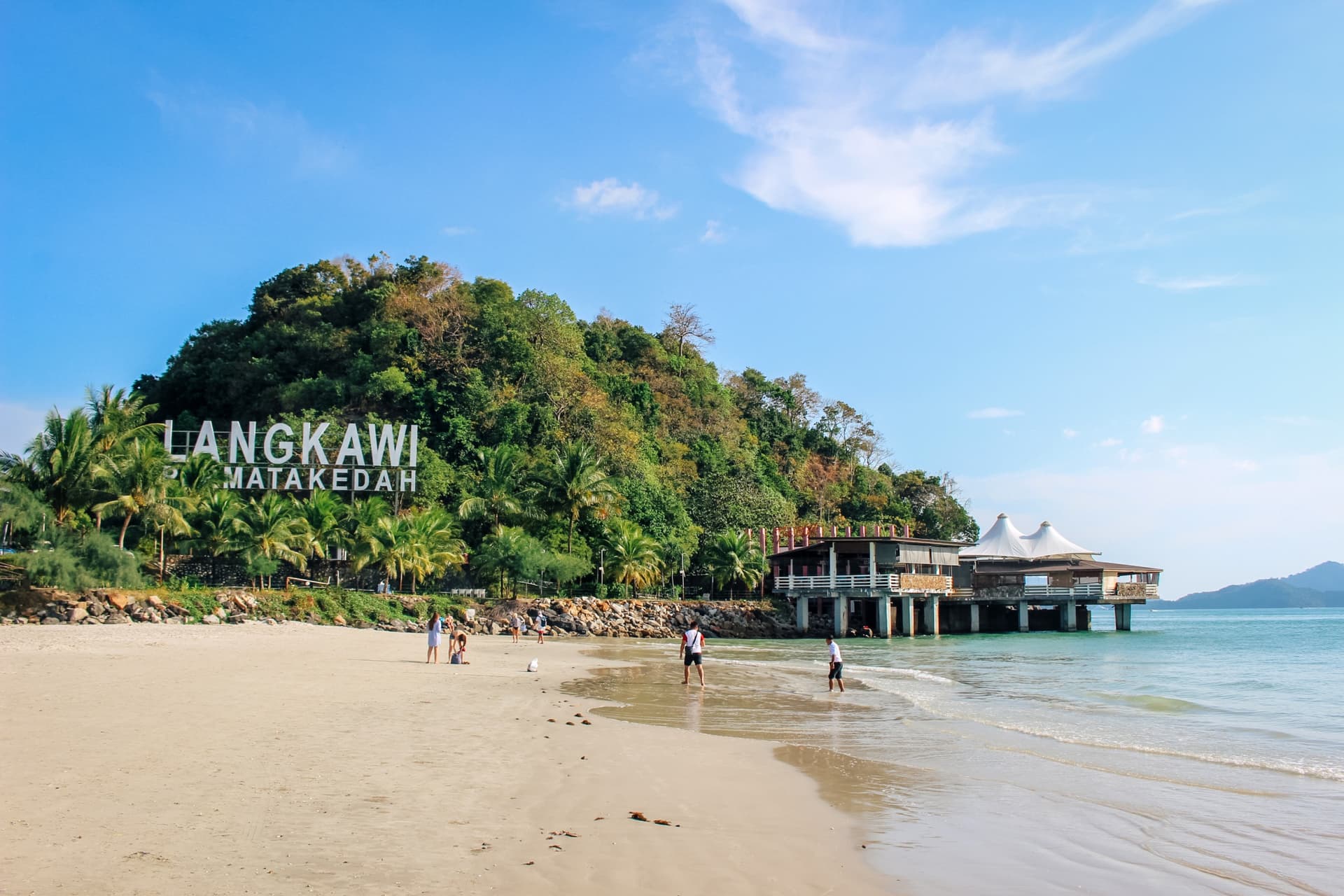
Langkawi is the most accessible: a one-hour flight from Kuala Lumpur, then internal ferry or car to reach Pantai Cenang, Pantai Tengah, or the quieter northern coast at Tanjung Rhu. The island is actually an archipelago of 99 islets, designated a UNESCO Geopark for its limestone cliffs and Kilim mangrove forests, which you traverse by boat among white-bellied sea eagles and long-tailed macaques. The Mat Cincang cable car climbs to 708 meters and offers, on clear days, views of the neighboring Thai islands of Tarutao. Local cuisine is built around fish: Kedah laksa, curried fish, and satay grilled at the water's edge in Pantai Cenang.
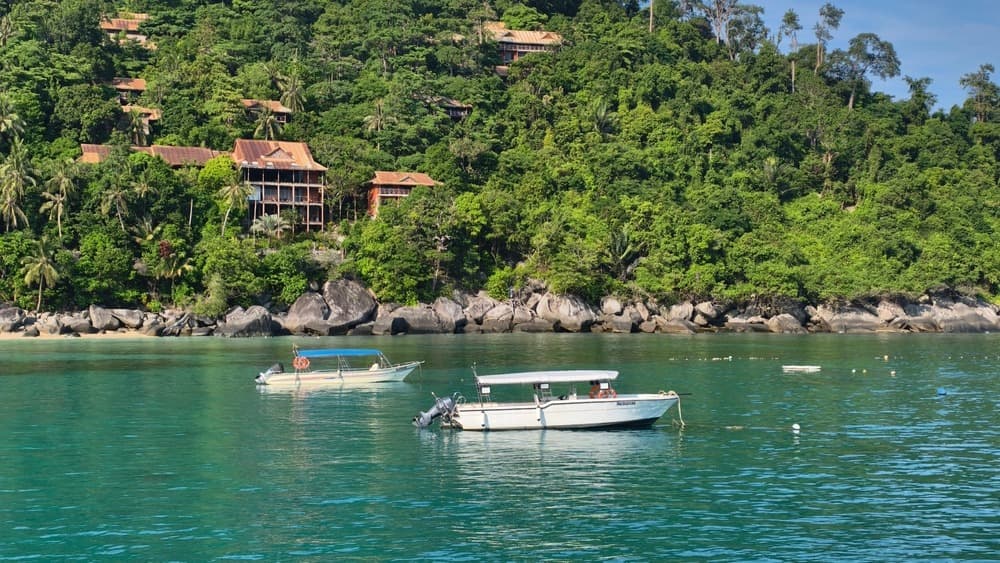
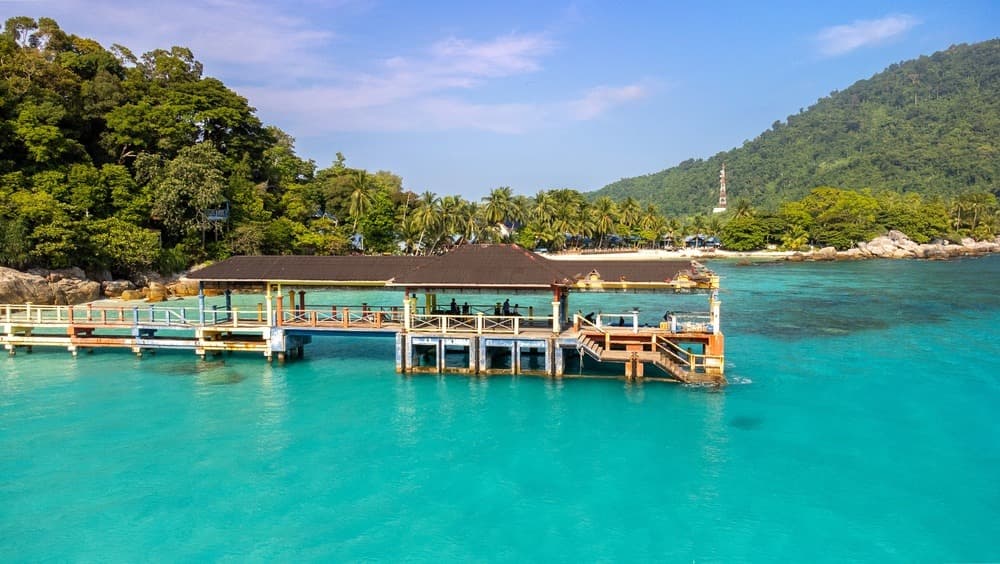
On the opposite side of the peninsula, Perhentian (Kecil and Besar) and Tioman follow the northeast monsoon rhythm. From March to October, visibility drops to 25 meters, sometimes more, and snorkeling from the beach suffices to spot green turtles, stingrays, and schools of trevally. Perhentian is accessible by speedboat from Kuala Besut in Terengganu; Tioman by ferry from Mersing in Johor. No cars exist on Perhentian Kecil, only forest trails between Long Beach and Coral Bay, with a local economy centered on dive centers run by families established for two generations.
Tioman is larger, more forested, and retains a village character in hamlets like Juara on the east coast, where a concrete road replaced the old forest trail in 2020 yet fishermen still depart at dawn. The island hosts a turtle conservation project at Juara Turtle Project, which we happily integrate into family itineraries. The interior forests, designated a reserve, can be crossed in four hours of trekking between Tekek and Juara, with dry elevation gains and sustained heat.
Sipadan is a different story. It's an isolated volcanic pinnacle off Semporna, descending to 600 meters, and Malaysia's only site where you dive with barracudas in tornado formations, gray reef sharks, and dozens of turtles at every safety stop. Daily permits are capped at 178 divers, allocated to operators based on neighboring islands (Mabul, Kapalai). We reserve permits three to six months in advance—without this, your dive isn't guaranteed. Nights are spent on Mabul, a Bajau island of stilt houses, or Kapalai, also on stilts but without dry land.
These three island groups have neither the same climate, logistics, nor clientele. Langkawi suits year-round stays and travelers wanting to combine relaxation with land activities. Perhentian and Tioman are seasonal beach escapes, simple and modest. Sipadan caters to Advanced-certified divers who accept challenging logistics in exchange for a site ranked among the world's top ten.
Must-See
Kilim Mangrove Forests, Langkawi. Three hours by boat through a labyrinth of channels between limestone cliffs, bat caves, and eagle nests. Available year-round; early morning departures avoid peak heat.
Snorkeling at Perhentian Kecil. Green turtles visible just 10 meters from shore at Turtle Beach, and blacktip reef sharks accessible by fins from Coral Bay. Water temperatures of 28–29°C from March to October.
Diving at Sipadan. The Barracuda Point wall drops beyond 600 meters, with regular passages of barracuda tornados and gray sharks. Accessible only with a named permit, requiring advance booking.
Bajau Village of Mabul. Stilt houses and the Bajau Laut community, a semi-nomadic sea people. Children dive by breath-hold to 8 meters for shellfish, a daily sight from lodge docks.
Forest Trek across Tioman. Four hours of hiking between Tekek and Juara through the reserve, encountering monitor lizards, flying squirrels, and wild orchids. Steep initial section, then gentle descent to the east coast.
When to Visit
Both coasts function as mirrors. The west coast, Langkawi, can be visited year-round with a drier season December to March (28–32°C, brief late afternoon showers) and a wetter period August to October, though activities continue. The east coast—Perhentian and Tioman—officially close from early November to late February: the northeast monsoon generates 2–3 meter swells, ferries are suspended, and most accommodations shut down. The best window runs April to early September, with maximum underwater visibility in May–June and August–September.
Sipadan and the Semporna region are diveable March to December, with calmer seas April to June and manta season July to September. January–February remain possible but with more rain and plankton, reducing visibility to 15–20 meters instead of the usual 30. We avoid programming Sipadan during peak monsoon without clear advance notice to travelers.
Practical Advice
Plan a minimum of 4 nights for Langkawi, 5–6 nights for Perhentian or Tioman (transfers from Kuala Lumpur by plane and ferry consume a full day), and 6–7 nights for a Sipadan diving trip including permits. Domestic flights depart KLIA or Subang for Langkawi, Kota Bharu (gateway to Perhentian), and Tawau (gateway to Semporna and Sipadan). No island is a same-day round-trip: ferries run only one or two departures daily.
Langkawi combines naturally with Penang (30-minute direct flight or ferry) and Kuala Lumpur. Perhentian pairs well with a Cameron Highlands detour to escape the heat. Sipadan fits logically into a Borneo Sabah circuit, after Kinabatangan or Mount Kinabalu. Comfort ranges from simple bungalows on Perhentian Kecil (fan, limited hot water) to 5-star resorts at Tanjung Rhu and Datai in Langkawi, plus water bungalows at Kapalai. This region suits families (Langkawi, Tioman with the Turtle Project), laid-back beach travelers (Perhentian), and experienced divers (Sipadan, Advanced level required).