Tabin Wildlife Reserve
Tabin Wildlife Reserve
Located 50 km from Lahad Datu, Tabin Reserve protects 122,539 hectares of rainforest, a sanctuary for pygmy elephants, primates and hornbills of Borneo.
In the heart of the Dent Peninsula, in northeastern Borneo, Tabin Wildlife Reserve spans 122,539 hectares of rainforest south of the lowlands of the Segama River. Established in 1984 to protect three emblematic mammals of Sabah, it has become one of the major wildlife observation sites in the Malaysian state of Sabah.
Why visit Tabin Reserve
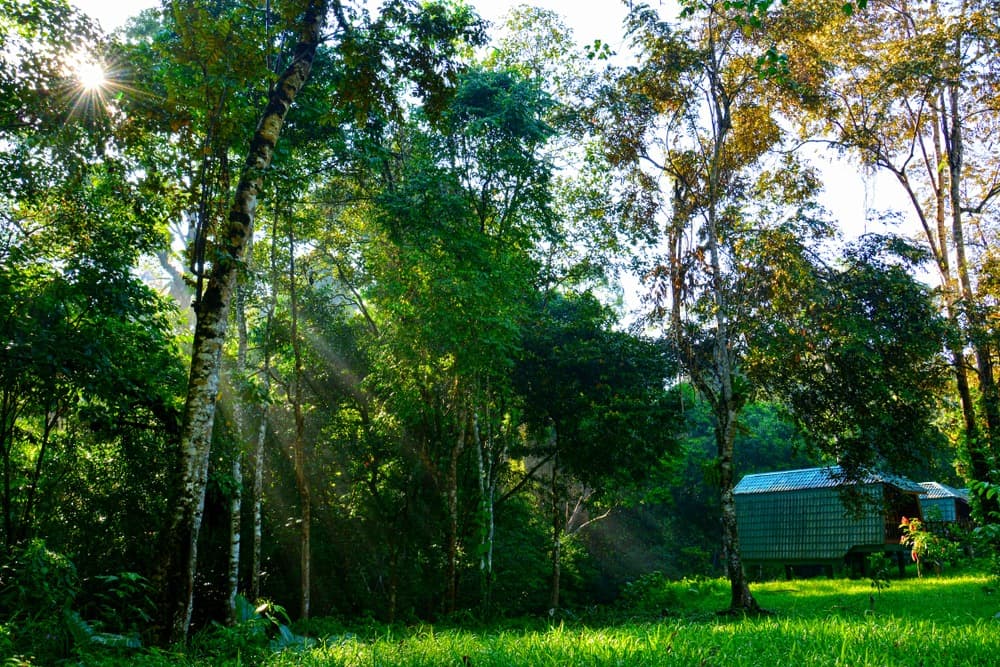
Tabin stands out for the diversity of its habitats: primary dipterocarp forest, regenerating secondary forest areas, and active mud volcanoes. This ecological mosaic attracts abundant wildlife, observable from marked trails or during night safaris by 4x4. The reserve remains less visited than the Kinabatangan River or Sepilok, allowing for more peaceful observation.
Birdwatchers will find plenty to discover with over 200 bird species recorded, including several hornbill species. The mud volcanoes, rich in minerals, regularly attract mammals that come to lick the salt deposits.
History and management of the reserve
Tabin Wildlife Reserve was established in 1984 with a specific objective: to protect the Borneo pygmy elephant, the Borneo rhinoceros (a subspecies of the Sumatran rhinoceros), and the banteng, a wild ox. The elephant population was estimated between 120 and 300 individuals in 1993, a figure that remains the commonly cited reference data. As for the Borneo rhinoceros, its situation deteriorated over the decades and the species is now considered extinct in the wild in Malaysia since 2019.
The management of the site is shared between two institutions: the Sabah Department of Wildlife supervises the animals, while the Forest Department manages the vegetation. This dual oversight reflects the hybrid status of the place, functioning as both a wildlife reserve and a classified forest.
What to see and do at Tabin
Observe wildlife
Tabin is home to a wide variety of ungulates (sambar, muntjac, mouse deer) and primates: Bornean gibbon, langurs, western tarsier, slow loris, and two types of macaques. Orangutans and proboscis monkeys are also present, in more limited numbers. As for predators, the Sunda clouded leopard sits at the top of the food chain; sightings remain rare, but leopard cats and civets are more readily encountered, especially during night outings.
Hike the marked trails
Nine marked trails crisscross the reserve, all accessible only with a guide:
- Gibbon Trail (2.8 km): the longest, leading to Lipad waterfall
- Raleigh Trail (2.5 km)
- Elephant Trail (2.2 km)
- Rhinoceros Trail (1.8 km)
- Otter Loop (1.2 km)
- Sambar Deer Trail (1.16 km)
- Mud Volcano Trail (0.7 km)
- Otter Trail (0.5 km)
- Mouse Deer Trail (0.4 km)
Explore the mud volcanoes
Several active mud volcanoes dot the reserve. Rich in minerals, they serve as a natural salt source for wildlife. An observation tower overlooks the Lipad mud volcano and allows you to survey the surroundings without disturbing the animals that come to drink or soak. Fresh tracks in the mud offer an excellent indication of animal activity in the area.
Night safaris
The reserve's trails are open for night safaris by 4x4, organized by the lodges. These outings increase the chances of encountering civets, lorises, leopard cats, and certain nocturnal birds. Photography and videography are permitted, in accordance with your guide's instructions.
Accommodations and practical information
Your stay in the reserve is through one of two approved lodges:
- Tabin Wildlife Resort: the historic complex, with 20 rooms divided into 10 river lodges and 10 hill lodges. Each room features a private bathroom with hot shower, balcony, and ceiling fan. The resort arranges transfers from Lahad Datu.
- Tabin Rainforest Lodge: opened in 2024 in the Sungai Kapur Forest Reserve, adjacent to Tabin. Twelve air-conditioned rooms and a swimming pool offer a more comfortable option.
Plan for two to three nights on-site to fully enjoy the trails and night outings. Rates typically include meals, guides, and activities, on an all-inclusive package basis.
When to visit Tabin
The equatorial climate of Sabah allows for visits year-round, with stable temperatures around 25-32 °C. The driest season runs approximately from March to October, ideal for hiking and safaris. The period from November to February brings heavier rainfall which can make certain trails muddy, but encourages wildlife activity and atmospheric photography. Birdwatching is rewarding throughout the year.
How to get there
The reserve is located approximately 50 km northeast of Lahad Datu, the gateway town to the site. Lahad Datu is connected by air to Kota Kinabalu, the capital of Sabah. By road, allow approximately 4 hours from Sandakan and 2 hours from Sukau (Kinabatangan). The final journey between Lahad Datu and the reserve takes about 40 minutes, on paved roads followed by gravel tracks. Transfers are provided by the lodges from Lahad Datu.
What to see nearby
Eastern Sabah offers several natural extensions: the Kinabatangan River and the village of Sukau for river cruises, Sandakan and the Sepilok Orangutan Rehabilitation Centre, or Sipadan Island for diving. On the Malaysian peninsula, you can extend your trip with Batu Caves near Kuala Lumpur or Penang Hill in Penang.
Frequently asked questions
Frequently asked questions
Plan your trip
Tabin Reserve fits naturally into a nature-focused itinerary in Sabah, to combine with Kinabatangan and Sepilok. To build your custom itinerary, explore our Malaisie trips.
Interested in this visit?
We can include it in your personalised itinerary.