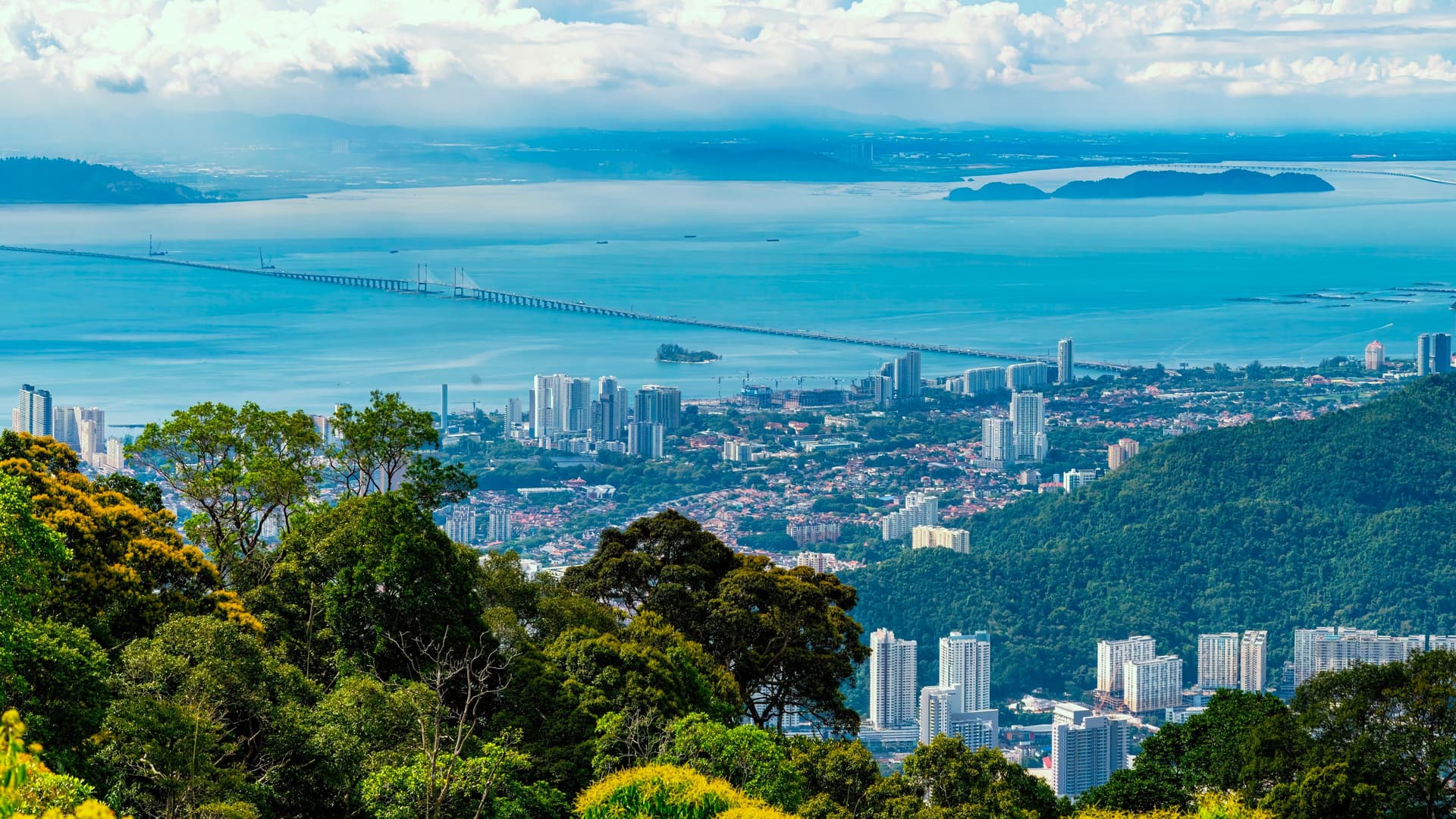
Penang
A heritage island in northwestern Peninsular Malaysia, Penang combines UNESCO-listed Georgetown, street food considered the country's finest, and a forested ridge rising to 833 meters.
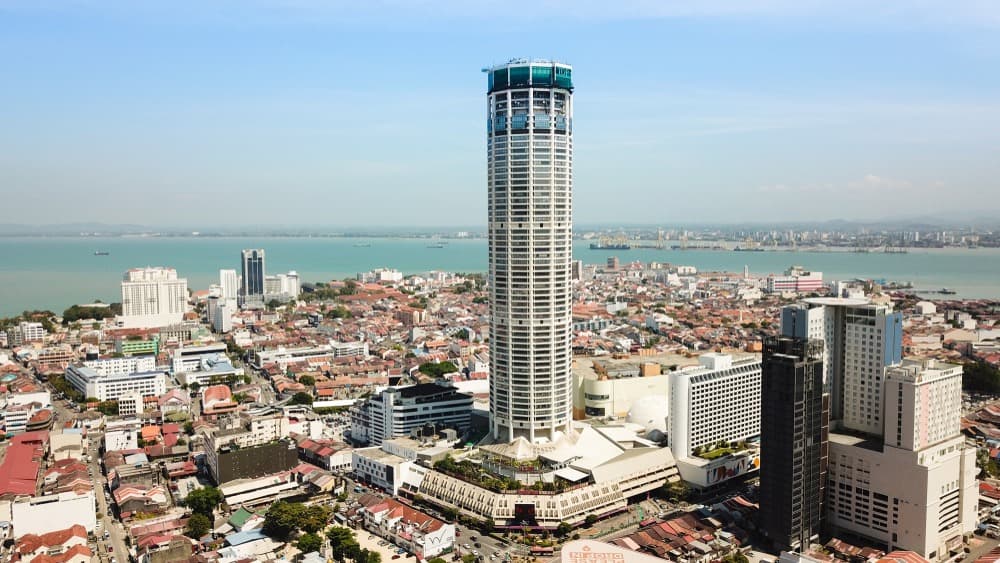
Penang is a 295 km² island set in the Strait of Malacca, linked to the northwestern coast of the peninsula by two causeways and served by an international airport at Bayan Lepas. It was here, in Georgetown, that the British East India Company established its first trading post in Malaysia in 1786. This historical depth explains the density of heritage in the city center, UNESCO-listed since 2008, and the cultural fusion that still shapes daily life: Hokkien and Cantonese communities, Tamil Indians in Little India, Peranakans (descendants of Sino-Malay marriages), Muslim Malays, alongside Armenian, British and Portuguese legacies visible in street names.
The island's geography divides into two distinct zones. To the east lies an urbanized coastal plain where Georgetown and its industrial suburbs sprawl. To the west and center rises a forested ridge of hills culminating at Penang Hill (833 m), where a funicular railway built in 1923 climbs to a cool plateau in half an hour (often 5 to 7°C cooler than the city). To the northwest, Penang National Park, Malaysia's smallest (23 km²), shelters quiet beaches like Monkey Beach and Kerachut, accessible by boat from Teluk Bahang or via forest trails.
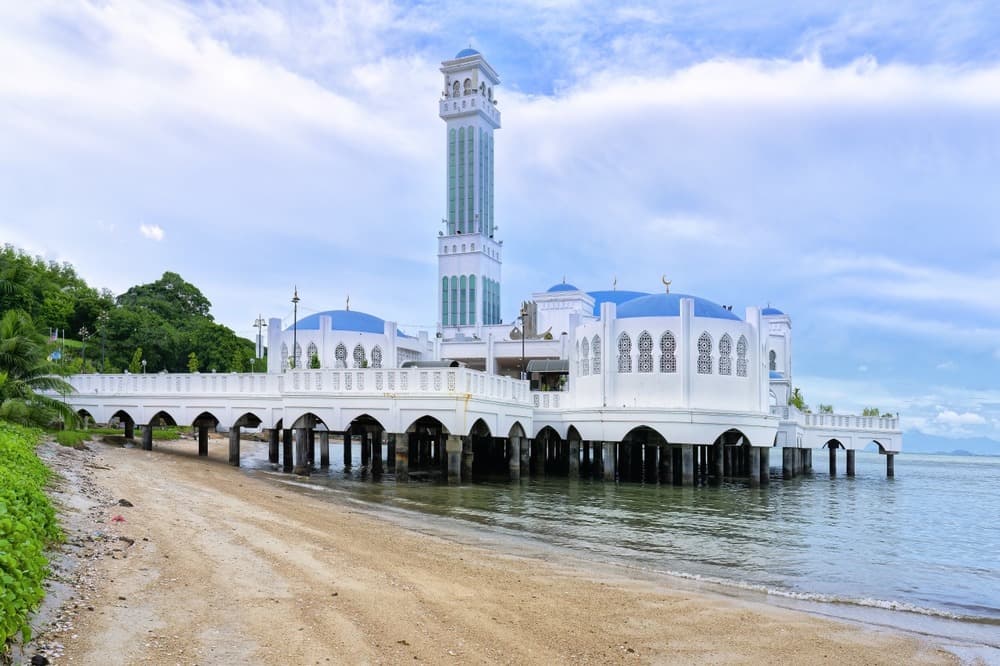
Georgetown is best explored on foot. The historic quadrilateral between Lebuh Pantai, Lebuh Chulia, Lebuh Armenian and Lebuh Pitt contains restored Sino-Portuguese shophouses, Chinese temples (Khoo Kongsi, a Hokkien clan house from 1906), 19th-century mosques (Kapitan Keling), Hindu temples (Sri Mahamariamman) and Anglican and Catholic churches. Since 2012, murals by Lithuanian artist Ernest Zacharevic have turned Armenian Street and its adjoining lanes into an open-air street art trail, complemented by wrought-iron sculptures telling stories of local trades.
Cuisine is the main draw for many of our travelers. Penang is considered by most Malaysians as the country's gastronomic capital. This rings true in the hawker centers (Gurney Drive, New Lane, Chulia Street at night, Air Itam for laksa) and family-run kopitiams. Key dishes to seek out: assam laksa (tangy soup based on sardines and tamarind, scattered with pineapple and torch ginger), char kway teow (flat noodles stir-fried over high heat with cockles and bacon), hokkien mee (shrimp broth), nasi kandar (rice topped with multiple curries, an Indo-Muslim specialty from Transfer Road), and Air Itam cendol served beneath a century-old banyan tree.
Beyond Georgetown, the island offers useful contrasts. To the south, Balik Pulau is a rural zone of durian, nutmeg and clove plantations, reached by a road skirting the ridge through Malay fishing villages of Teluk Kumbar. To the north, Batu Ferringhi remains the historic beach resort—we rate it less highly, as the water is turbid and beaches packed with resorts. Better to spend half a day in the national park, combining a 1.5-hour walk to Kerachut beach and returning by boat (45 minutes).
Penang also hosts several landmark calendar festivals: Chinese New Year (January-February) with processions at the illuminated Kek Lok Si temple lit for a month, Thaipusam at Little India (January-February as well), and the George Town Festival each July-August, featuring visual arts, theater and music in heritage buildings.
To Discover
Historic center of Georgetown. A day's walk through Hokkien clan houses, Armenian Street murals and Pitt Street temples, where mosque, Chinese temple and Hindu temple line up within 300 meters.
Hawker centers and street food. Dinner at New Lane or Gurney Drive, where some thirty stalls serve assam laksa, char kway teow and rojak for 3 to 5 euros a plate, from dusk until midnight.
Penang Hill by funicular. A 30-minute ride to 833 m from Air Itam, views across the strait to the peninsula, and trails to the Habitat, a canopy walkway through 130-million-year-old primary forest.
National park to the northwest. A 1.5-hour hike from Teluk Bahang to the meromictic lake at Kerachut, then swimming at Monkey Beach and return by fishing boat.
Balik Pulau and the rural hinterland. A day by bike or car through durian and nutmeg plantations in the island's south, lunch with laksa at a village warung off the beaten track.
When to Go
Penang enjoys an equatorial climate with two rainy seasons. The wettest period runs from September to November, with monthly rainfall exceeding 200 mm and near-daily afternoon storms. We particularly avoid late September and October, when the tail end of the southwest monsoon combines with dry haze episodes (haze) from agricultural fires in Sumatra, just across the strait. The second rainy season, April to May, is shorter and less disruptive.
The most stable window stretches from December to March, with temperatures of 26 to 32°C, high humidity but often sunny afternoons. June to August remains viable, hot (up to 33°C) and punctuated by showers. On Penang Hill, expect 5 to 7°C cooler than in the city, making the altitude pleasant even in the hot season. For a stay focused on street food and city walks, we recommend January-February, which coincide with Chinese New Year.
Practical Tips
Three nights on Penang is the minimum: one day for Georgetown's heritage center on foot, one day for Penang Hill and Kek Lok Si temple, one day for the national park or Balik Pulau. Adding a fourth night allows you to slow down and enjoy multiple meals at hawker centers, something many of our travelers regret not planning. Bayan Lepas airport has daily connections to Kuala Lumpur (1 hour flight), Singapore and Bangkok. The ETS train from Kuala Lumpur to Butterworth takes 4 hours, followed by a 15-minute ferry crossing to Georgetown.
Penang combines naturally with Kuala Lumpur at the start or end of a circuit, and with the Cameron Highlands 4 hours southeast by road for a city-mountain contrast. For travelers continuing to islands and beaches, Langkawi is 2h45 by ferry to the north. Accommodation in Georgetown ranges from heritage hotels in converted shophouses (Cheong Fatt Tze, Seven Terraces) to guesthouses on Chulia Street. The destination suits couples, heritage enthusiasts and food lovers well. It is less suited to travelers seeking beaches and leisure, better served elsewhere on the east coast or in Borneo.