Cameron Highlands
Highland plateau at 1500 metres among Boh tea estates, mossy forest and Orang Asli villages, with a temperate climate of 15 to 22°C year-round.
The Cameron Highlands form a high-altitude plateau in the heart of the Titiwangsa range, in the state of Pahang, approximately 1500 metres above sea level. The contrast with the plains of Peninsular Malaysia is immediate: we leave behind the humid 32°C of Kuala Lumpur or Ipoh for temperatures of 15 to 22°C, sometimes cool in the evening. The region takes its name from William Cameron, a British surveyor who mapped these heights in 1885. The British later established hill stations here and planted the first tea bushes in the 1920s, spearheaded by John Archibald Russell, founder of the Boh brand in 1929.
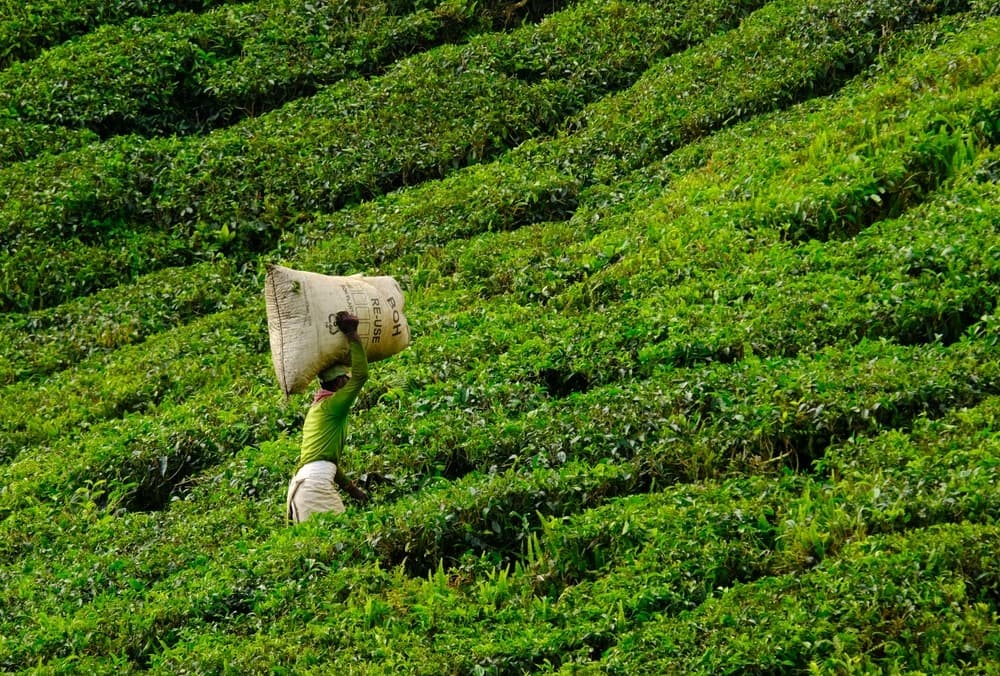
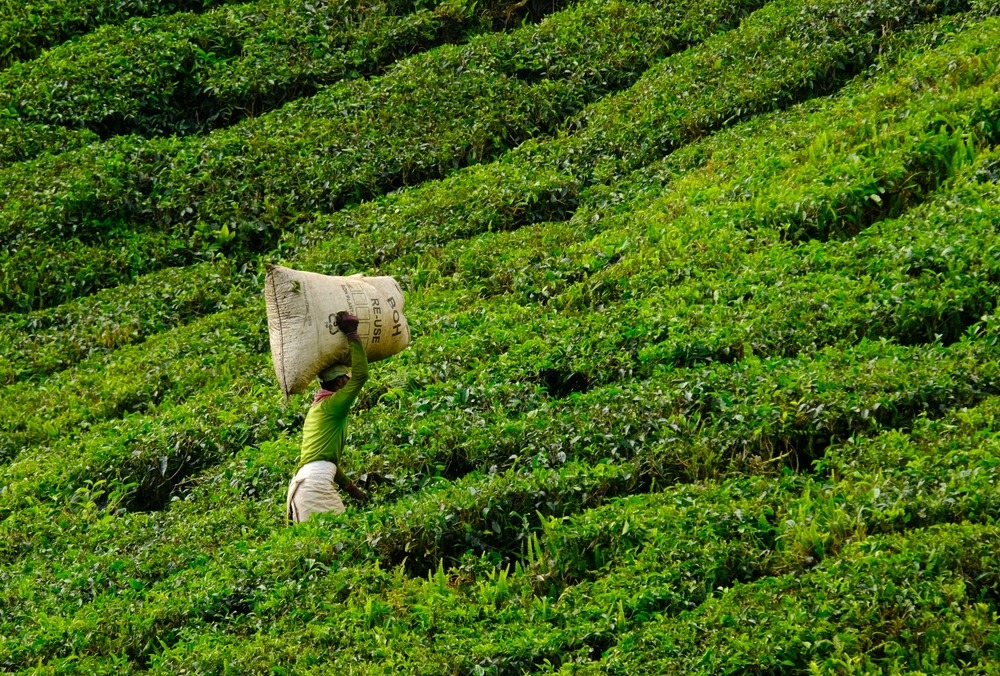
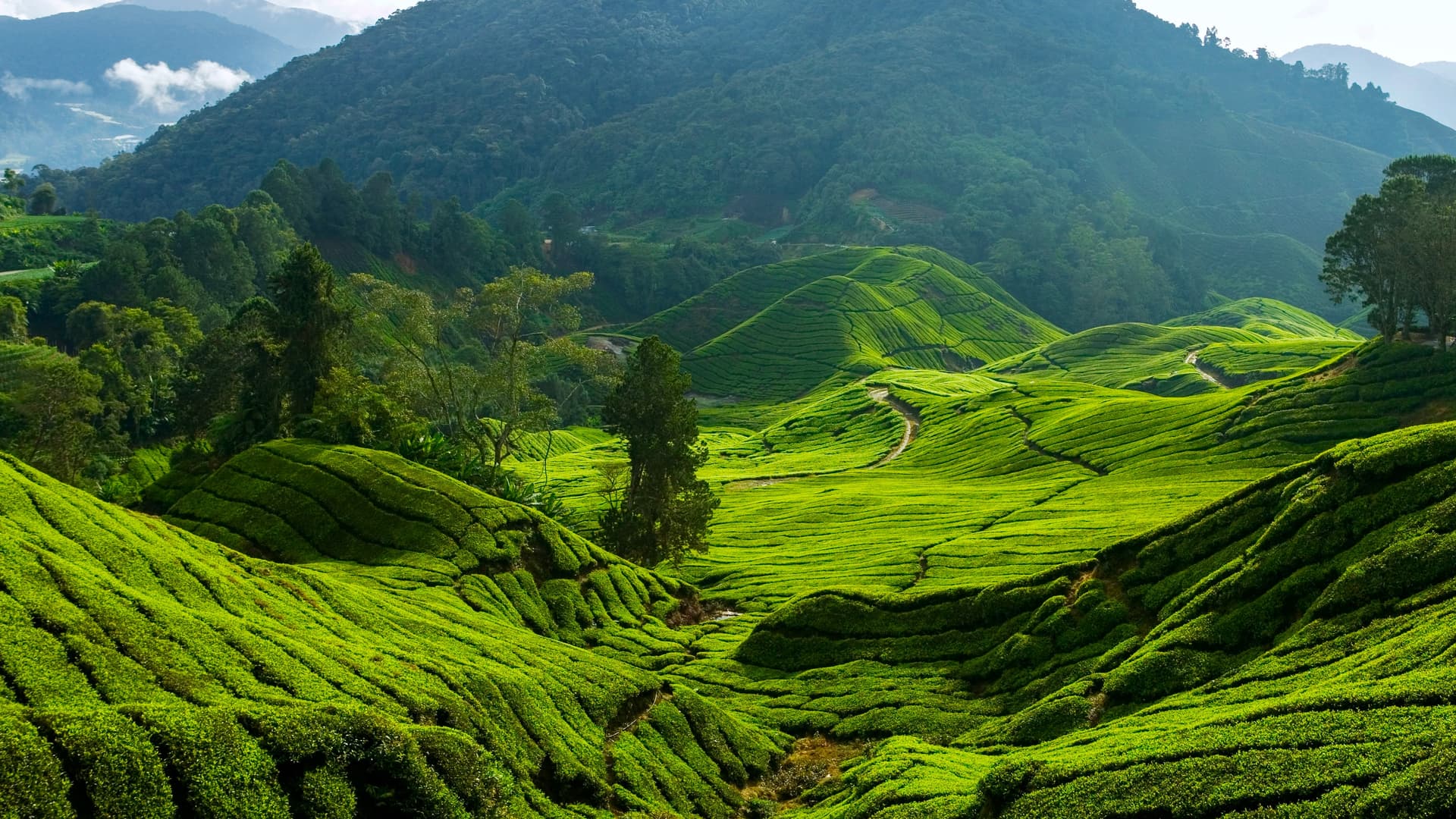
The plateau is organised around three main settlements: Ringlet to the south, Tanah Rata in the centre and Brinchang to the north. Tanah Rata remains our preferred base, more spacious and better served by restaurants than Brinchang, which has densified under pressure from weekend coaches from Singapore and KL. Beyond Brinchang, the road climbs further towards Kampung Raja and Mount Brinchang, the highest point accessible by car at 2032 metres. It is on these heights that the region's characteristic landscapes unfold: geometric rows of Boh tea plants at Sungai Palas and Habu, strawberry and tomato greenhouses stretching as far as the eye can see, and the mossy forest covering the ridges.
This mossy forest is one of the plateau's ecological singularities. At this altitude, near-constant humidity and cool temperatures favour the development of a carpet of mosses and lichens that envelops trunks, branches and soil. We guide travellers along wooden walkways and narrow trails where carnivorous pitchers (Nepenthes) grow and, in the favourable season between August and December, the Rafflesia, a parasitic flower that can reach 80 cm in diameter. Its blooming is unpredictable and lasts only a few days; our guides cross-reference information from the Semai Orang Asli communities, present in several hamlets of the valley, who spot the buds before they open.
The local economy rests on three pillars: tea, high-altitude market gardening and domestic tourism. The Boh plantations at Sungai Palas and Habu are free to visit, with a tasting terrace overlooking the hillsides. Around Brinchang and along the main road, hydroponic strawberry farms, rose cultivation, beehives and cactus plantations have multiplied. This is intensive greenhouse agriculture, which weighs on the landscape and water resources; we tend to direct visitors towards older, more sustainable operations. The cuisine reflects this diversity: steamboat (Malaysian fondue) served in the evenings at Tanah Rata restaurants, scones and tea at the Cameronian Tea House, Indo-Tamil dishes at stalls near the mosque.
In human terms, the Highlands bring together Malays, Chinese (descendants of coolies who came for tea), Tamil Indians (plantation labour) and Semai Orang Asli communities, the peninsula's indigenous peoples. This mosaic is evident in the cemeteries, Hindu temples at the foot of plantations, village mosques and bilingual schools. For travellers, a stay at altitude offers respite between Kuala Lumpur, Penang and the east coast, with accessible hikes of 2 to 4 hours in the highland jungle, requiring no particular technical skill.
What to discover
Boh Plantation at Sungai Palas. Sweeping views over the tea hillsides from the cantilevered terrace, a tour of the drying facility and a tasting of local black tea at 1500 metres altitude.
Mossy Forest on Mount Brinchang. A one to two-hour walk on wooden walkways through a forest covered in mosses, lichens and carnivorous Nepenthes plants, at 2000 metres.
Rafflesia in season. Between August and December, a 3 to 4-hour guided hike with a Semai Orang Asli guide to approach the world's largest flower, in ephemeral bloom.
Steamboat in Tanah Rata. Malaysian fondue with vegetables from the plateau and seafood, a typical shared dish for cool evenings around 18°C, in restaurants on the main street.
Mount Berembun Trail. A 4-hour loop from Tanah Rata through primary forest, moderate elevation gain to the summit at 1840 metres, without crowds.
When to go
The plateau enjoys a temperate highland climate year-round, with daytime temperatures between 15 and 22°C and dropping to 10-12°C at night in December and January. The driest and most pleasant months are June to August, with clear mornings ideal for hiking and photographing the plantations. From November to February, the north-east monsoon brings frequent rains, especially late in the afternoon, with monthly totals often exceeding 300 mm; mist settles over the ridges and can obscure the landscape for several days on end. Mossy forest trails become slippery.
We avoid extended weekends and Malaysian school holidays (late March, late May, late August, late November), periods when Tanah Rata and Brinchang are saturated with visitors from KL and Singapore. For Rafflesia, the observation window extends from August to December, with no guarantee: we confirm the presence of a bud about to open 24 to 48 hours before the hike.
Practical tips
Two nights on site is the format we recommend: one day to visit a Boh plantation and the mossy forest, a second for a more demanding hike such as Mount Berembun or a search for Rafflesia. Three nights are justified for hikers wishing to tackle several trails, or travellers seeking cooler air after the coast. Access is by road from Ipoh (3 hours, 90 km of tight bends) or from Kuala Lumpur (4 hours via Tapah). No airport on the plateau; we arrange transfers in a private vehicle with driver, more flexible than buses.
The Highlands combine well with Penang and Ipoh to the north-west, Kuala Lumpur to the south, and can serve as a stopover before a flight to Borneo (Sabah or Sarawak) or the islands of the east coast. Hotel comfort remains modest to reasonable: renovated colonial guest houses, wooden lodges, a few charming addresses like The Lakehouse in Ringlet. The region is particularly suited to families with children (accessible hikes, strawberry farms), contemplative travellers and occasional hikers. It will suit less those seeking beaches or nightlife.