Borneo - Sarawak
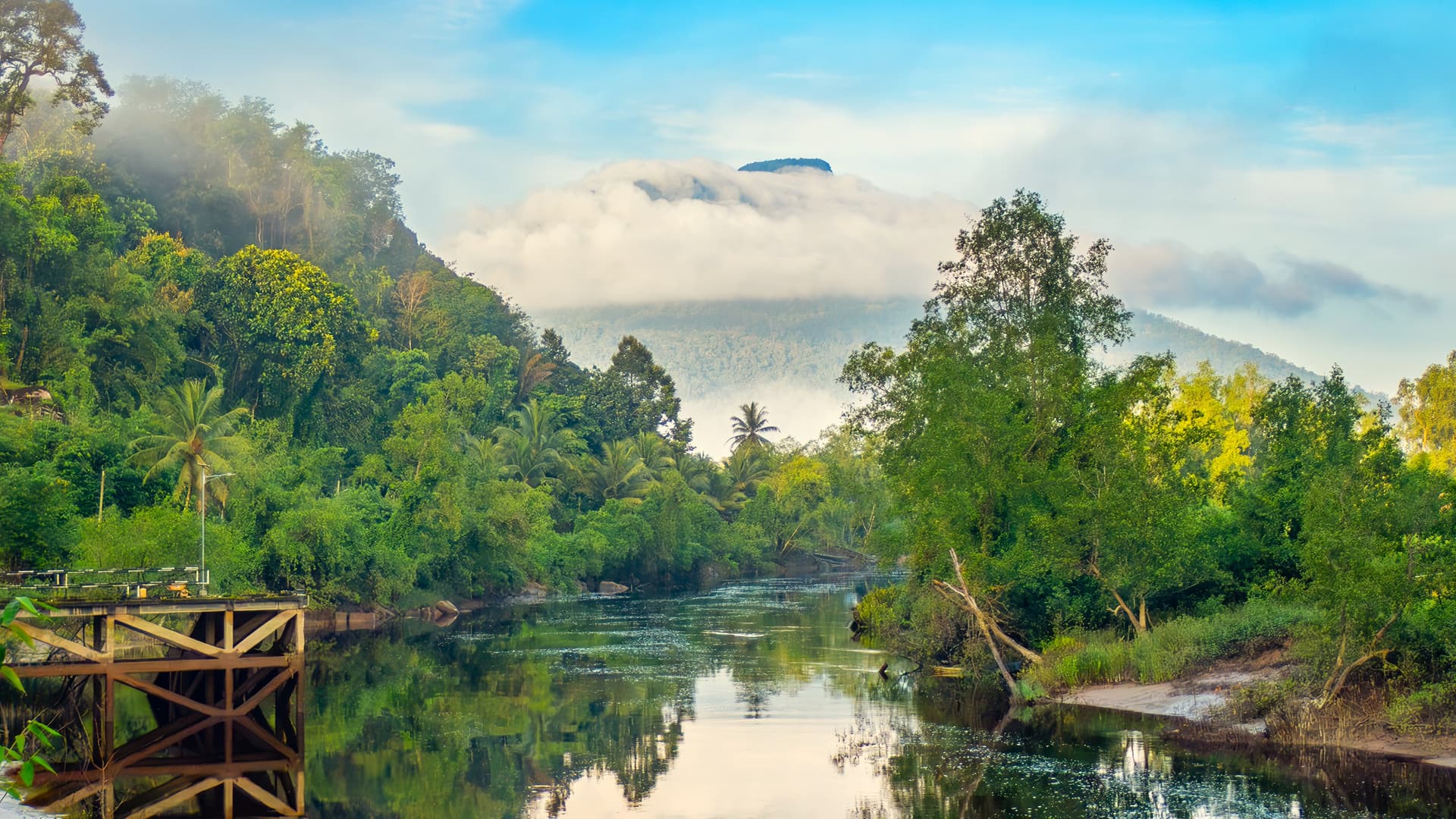
Sarawak, the riverine and forested face of Malaysian Borneo, where Kuching, Iban longhouses and the karst peaks of Gunung Mulu compose a journey of culture and wilderness.
Sarawak occupies the northwestern portion of Borneo and remains, in our view, the most raw facet of Malaysia. The state stretches across nearly 750 kilometers of coastline along the South China Sea, backed by a hinterland of rainforests, wide rivers and limestone massifs that extend to the Indonesian Kalimantan border. Unlike neighboring Sabah, which leans toward beaches and diving, Sarawak preserves a riverine and forested identity, inherited from the era when the Brooke white rajahs administered the region from Kuching.
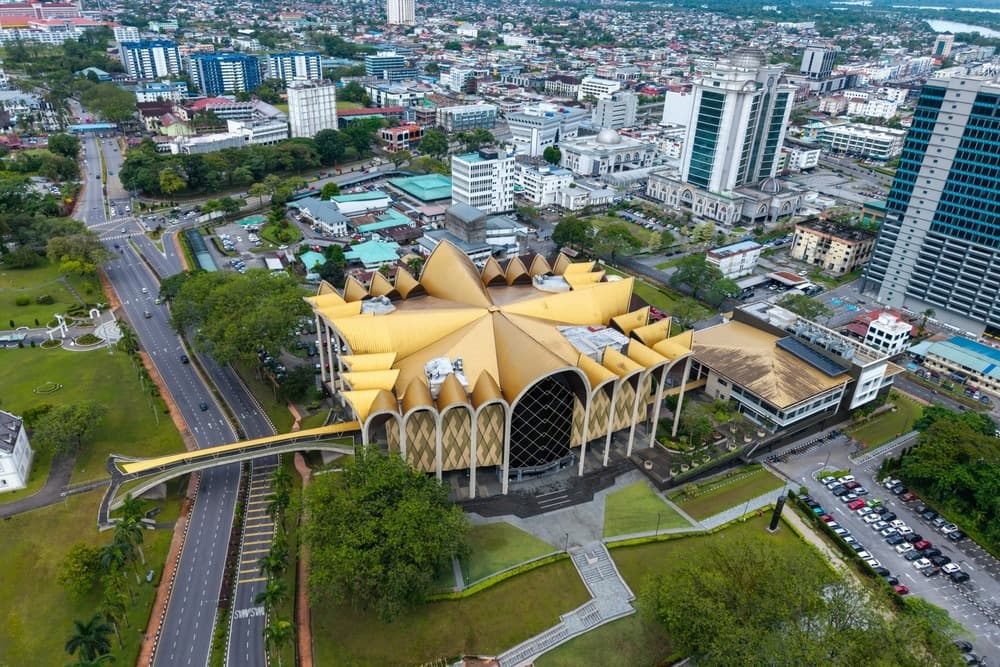
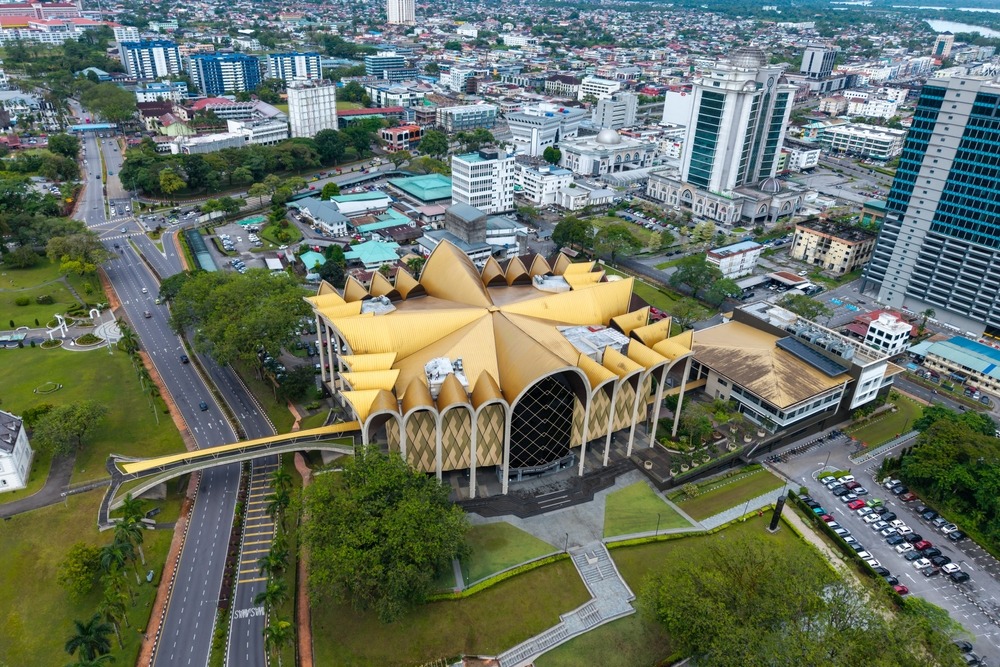
Kuching, indeed, serves as the gateway. With 600,000 inhabitants, it is a human-scaled city, positioned on both banks of the Sarawak River, where locals move about in tambang—small flat-bottomed boats shuttling passengers for a few ringgits. We bring our travelers to the Sarawak Museum and its contemporary extension, the Borneo Cultures Museum opened in 2022, which houses one of Southeast Asia's most comprehensive ethnographic collections on Dayak peoples. Gastronomically, Sarawak laksa and kolo mee are eaten at breakfast in the kopitiams of the Chinese quarter, around Carpenter Street.
Beyond the capital, the territory unfolds in an arc around several focal points. An hour's drive away, Bako National Park covers 27 km² of a sandstone peninsula carved into coves, traversed by seven marked trails and inhabited by proboscis monkeys—those long-nosed primates found only in Borneo. Further inland, the Semenggoh rehabilitation center hosts a dozen semi-wild orangutans, observable during feeding times. For karst enthusiasts, Gunung Mulu Park, inscribed on the UNESCO World Heritage list in 2000 and accessible only by flight from Miri or Kuching, shelters the Deer Cave, whose main chamber stretches 2 kilometers long, as well as the Pinnacles—limestone spires of 45 meters reached after two days of trekking.
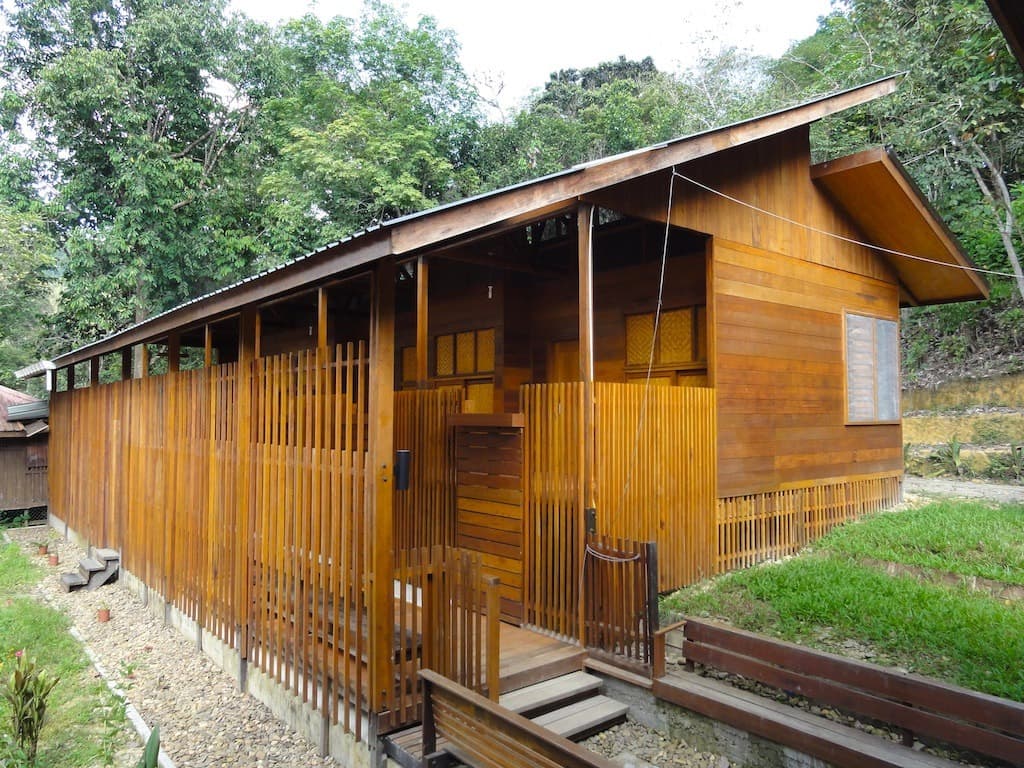
Yet Sarawak's soul lies along its rivers. The Iban, Bidayuh, Orang Ulu and Penan peoples, who together represent nearly 45% of the state's population, still live partly in longhouses—communal wooden structures that can shelter twenty to thirty families under one roof. We arrange overnight stays with families along the Batang Ai (a wild orangutan reserve at the Indonesian border) or the Lemanak River, by pirogue from Lubok Antu. The Bidayuh are more easily visited from Annah Rais, ninety minutes from Kuching, where the longhouse is home to over 500 residents.
The local economy rests on three pillars: palm oil, which has transformed portions of the coastal plains; offshore petroleum off Miri and Bintulu; and timber. This industrial pressure is real, and we do not conceal it from our travelers: parts of road journeys cross monocultures, and intact primary forest is now concentrated in national parks and certain tribal zones. This is also why a journey to Sarawak carries meaning—by directing stays toward community-based operators rather than lodges disconnected from local fabric.
As for festivals, Gawai Dayak on June 1st marks the end of rice harvests in the longhouses, opening to visitors if invited. And each July, the Rainforest World Music Festival, held at Sarawak Cultural Village in Santubong since 1998, draws musicians and audiences for three days. Two major moments we weave into our itineraries when dates align.
Must-See Experiences
Proboscis monkeys and beaches of Bako. Sandstone trails in Bako National Park between coves, cliffs and kerangas forest, with proboscis monkey spotting in late afternoon on trees bordering Telok Assam beach.
Caves and pinnacles of Gunung Mulu. Evening excursion to Deer Cave for the bat exodus (up to 3 million individuals), then a 3-day trek toward the limestone pinnacles of Gunung Api at 1,200 meters altitude.
Night in an Iban longhouse. Pirogue ascent of the Lemanak River from Lubok Antu, an evening shared with an Iban family around tuak (rice wine) and pansoh chicken cooked in bamboo.
Orangutans of Semenggoh. Rehabilitation center 24 km from Kuching, where a dozen semi-wild individuals descend to feeding platforms at 9am and 3pm, depending on fruit season.
Kuching riverside frontage. Twilight stroll along the Waterfront, crossing by tambang toward Kampung Boyan, then dinner of Sarawak laksa in the stalls of Chai Chee Street.
When to Visit
Sarawak's climate is humid tropical year-round, with stable temperatures between 24 and 32 °C at lower elevations and humidity rarely below 80%. The northeast monsoon settles from November through February and delivers most precipitation to the coast: in Kuching, December and January often exceed 600 mm monthly rainfall, compared to 200 mm in June-July. During this period, some sea outings to Bako may be canceled and longhouse trails become muddy.
The most stable window extends from March to September, with a dip in precipitation during June, July and August. This is the period we favor for Gunung Mulu treks and river ascents, as water levels remain sufficient for navigation while limiting extended downpours. Note that in interior massifs above 1,000 meters (Gunung Mulu summit at 2,376 m), nights dip to 12-15 °C, and a fleece is necessary even in the dry season.
Practical Advice
We recommend a minimum of 6 to 7 days on-site to combine Kuching, a coastal national park (Bako or Santubong) and one night in a longhouse. Allow 9 to 10 days if you add Gunung Mulu, reached by a 1-hour domestic flight from Kuching or Miri, with AirAsia and MASwings operating the route. Road distances in Sarawak are long, so internal transfers are mostly by air. Sarawak logically combines with neighboring Sabah (direct flight Kuching-Kota Kinabalu in 1.5 hours) for a complete Borneo overview, or with Kuala Lumpur at the beginning or end of your itinerary.
Comfort levels vary: in Kuching, urban hotels are adequate (3 to 5-star categories), but in longhouses and some forest lodges, you sleep on mats or in simple rooms with fans and shared facilities. This destination suits curious travelers drawn to living cultures, walkers (Mulu outings involve 6 to 8 hours of daily trekking) and families with children age 10-12 and up capable of enduring a full day in a pirogue. Contemplatives will find ample rewards on the rivers; beach enthusiasts are better directed toward the Perhentians or Langkawi.