Malacca
Malacca
UNESCO World Heritage site on the Strait of Malacca, a crossroads city of Malay, Chinese, Peranakan and Kristang cultures. Complete guide for 2 days on site.
Far more than a simple tourist destination, Malacca plunges you into a captivating blend of colonial architecture, Chinese traditions and Malay heritage. This coastal city, inscribed on the UNESCO World Heritage list, embodies the essence of what makes Malaisie so enchanting: a rich history, multicultural diversity and flavourful cuisine. It ranks among the must-sees on any visit to this country, just like George Town in Penang.
A Brief History
Parameswara, an exiled Sumatran prince, founded this city around 1400. It quickly became a prosperous trading post. From the dawn of the 16th century, Malacca established itself as the capital of a state whose influence extended to the far reaches of the Indonesian archipelago. With a population fluctuating between 100,000 and 200,000 inhabitants, the city attracted merchants from around the world. Tamils, Javanese, Chinese flocked to this strategic crossroads.
Around 1500, Malacca became one of the nerve centres of Asian maritime trade, establishing links with China, eastern Indonesia, India, the Persian Gulf and the Red Sea. But everything changed in 1511. Afonso de Albuquerque conquered the city and expelled Sultan Mahmud Shah. The Portuguese settled in for 130 years, developing a network of maritime trade routes connecting Malacca to Pulicat, Chittagong and other Asian ports. In 1641, the Netherlands took control, followed by the British in 1824.
Malacca Today
Malacca became part of Malaisie after independence. Today, the city retains visible traces of its past. The street names still bear Portuguese names, as does a significant portion of the Christian population.
In the Portuguese Quarter, the Kristang (distant Portuguese descendants) keep alive their ancestors' traditions such as the Festa de São Pedro. Paradoxically, despite 150 years of Dutch presence, Malacca bears fewer traces of that period than of Portuguese occupation. The city was inscribed on the UNESCO World Heritage list in 2008, jointly with George Town.
What to Do in Malacca?
Visit Dutch Square
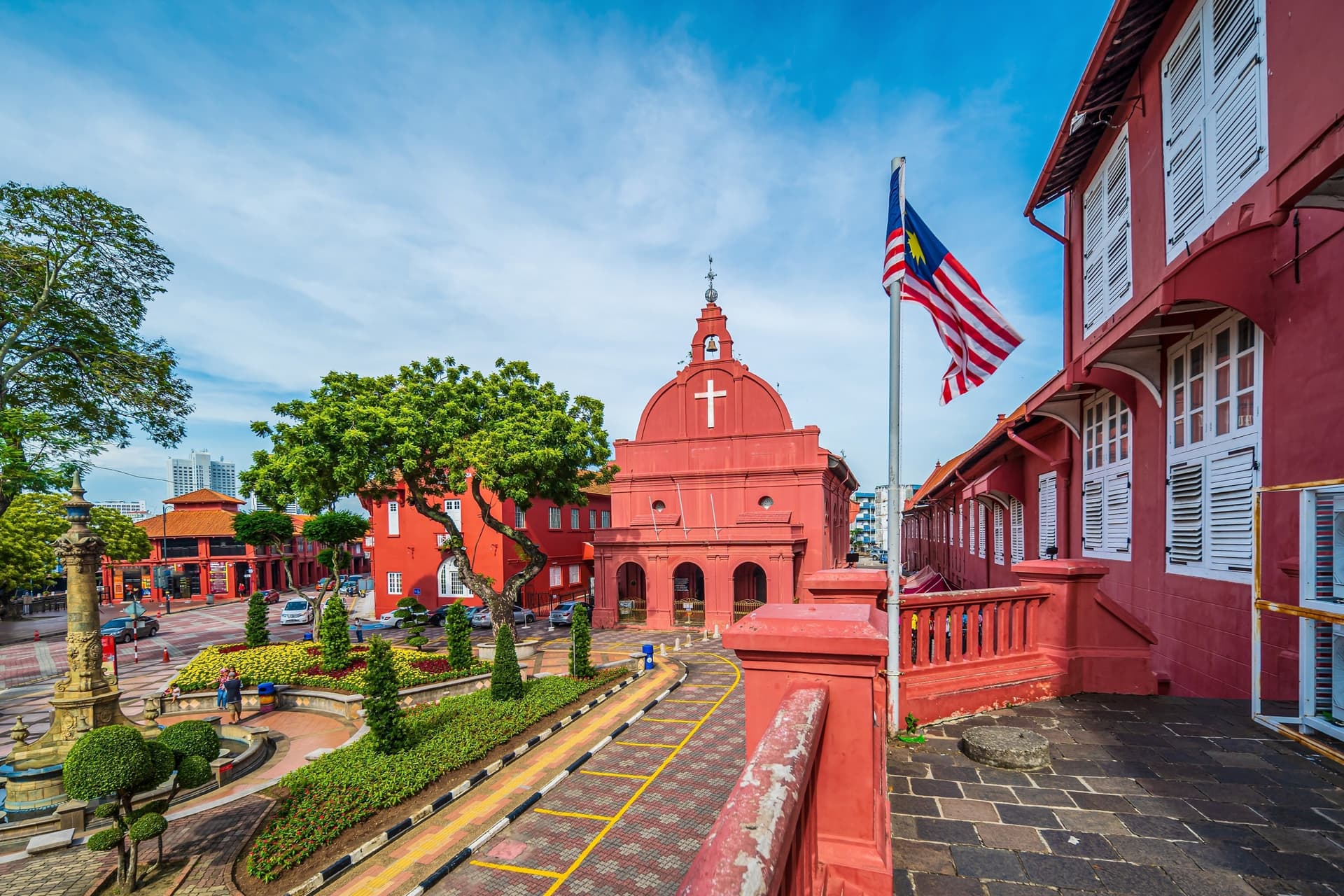
Dutch Square is the ideal starting point for any exploration of Malacca. Located in the heart of the historic centre, along the river, it strikes you with its uniformly Dutch colonial architecture painted in an earthy red.
You'll discover three major 17th-century monuments there: the Stadthuys, former residence of the governor (now housing an ethnographic museum), Christ Church Melaka and the Malacca Clock Tower. At the centre of the square, a colourful garden and fountain add a picturesque touch to the architectural ensemble.
Climb St Paul's Hill
From the Stadthuys, a small staircase leads up St Paul's Hill. The climb, without much difficulty, takes you to the ruins of St Paul's Church. The roofless religious building overlooks the city.
Originally built by the Portuguese in the 1500s, this church was damaged, repaired and renamed by the Dutch when they took control of Malacca in the 17th century. For over a century, it has remained in ruins.
If you take the northern trail to descend the hill, you'll pass numerous gravestones and the Dutch cemetery, further testimony to Malacca's colonial history.
Explore A Famosa
Built to protect Malacca's strategic port, this former Portuguese fortress once formed part of a vast defensive system comprising walls, bastions and military buildings. When the British decided to dismantle it in the early 19th century, most of it was destroyed. The only part still visible today is the Porta de Santiago, a stone gate that constitutes one of Southeast Asia's oldest European remnants.
Peek at the Sultanate Palace Museum
Malacca's sultanate palace is a meticulous reconstruction of the 15th-century palace, based on historical accounts. The museum it houses celebrates Malay culture and history. Beyond the lovely gardens, the exhibitions present local history, traditional costumes and folklore remarkably well. It's one of Malacca's most instructive sites.
Take a Boat Ride on the Malacca River
The river remains the city's principal landmark. Winding through the city before separating the old town from colonial sites, it's impossible to miss. A boat ride on this waterway offers you a different perspective on the city.
Enjoy Jonker Street
Jonker Street is undoubtedly Malacca's most famous street. On weekdays, it appears as a main artery of the old town. The atmosphere changes completely on Friday and Saturday evenings. The street becomes a lively place dotted with food stalls. It's the ideal place to savour traditional local Nyonya cuisine as well as more innovative dishes.
Stroll Through the Old Chinese Quarter
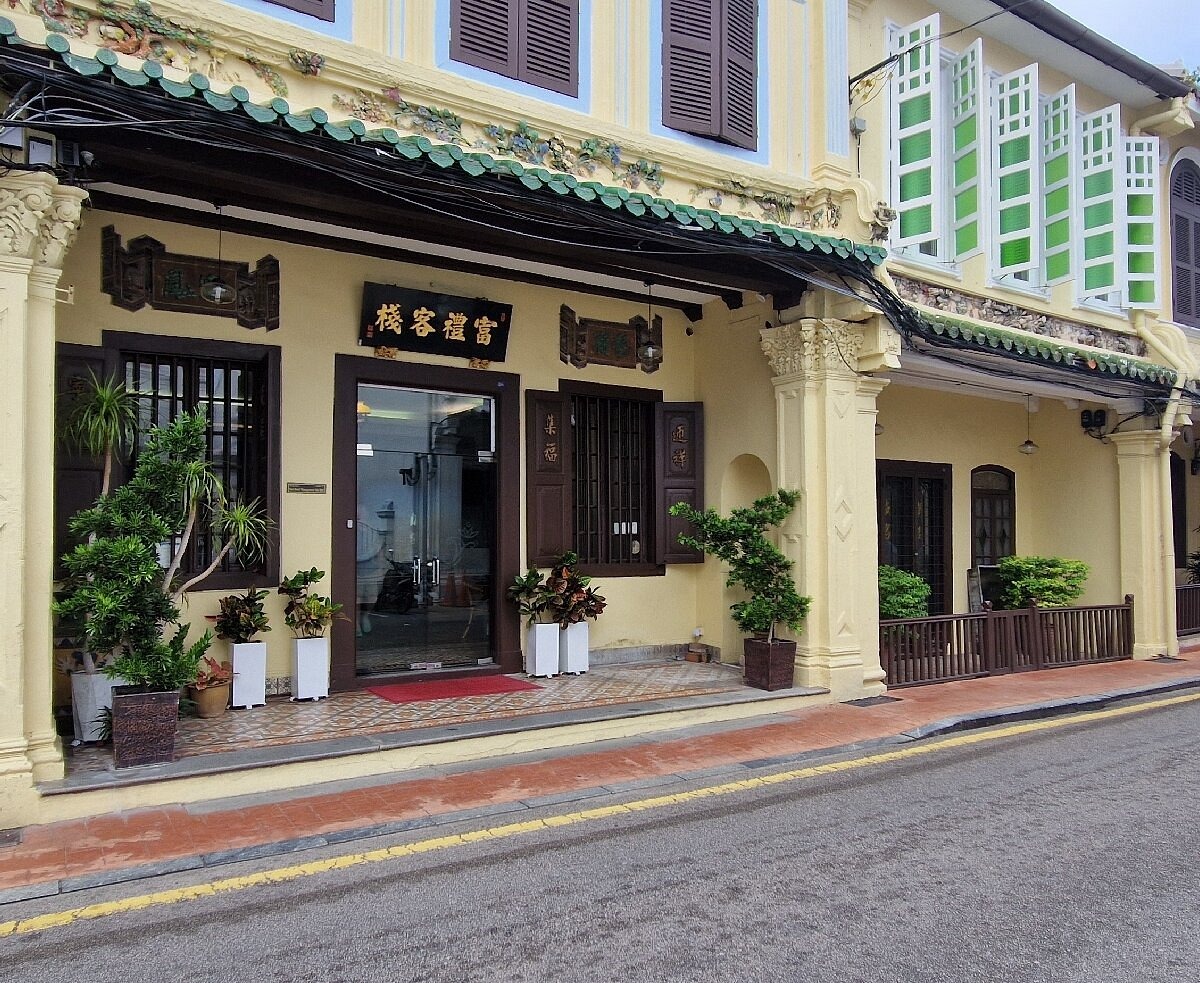
The old town extends well beyond Jonker Street. Exploring the adjacent alleyways, you'll discover houses with particular charm. Far from tourist hustle and bustle, you can quietly observe the architecture and daily life of residents. Faded façades and the patina of time contribute to the authentic charm of this peaceful neighbourhood.
See Cheng Hoon Teng Temple
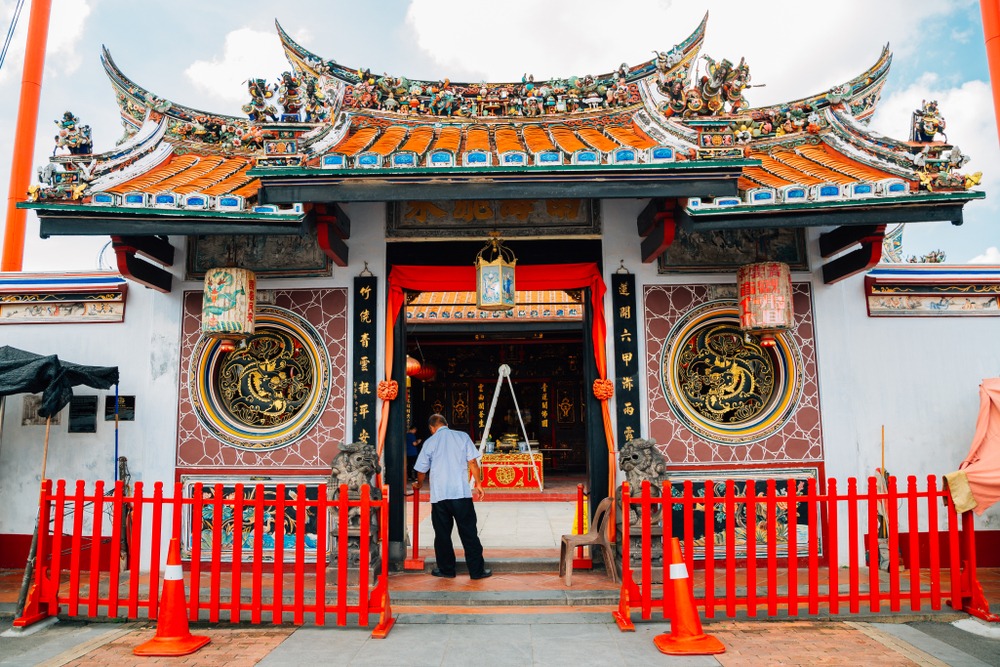
Malacca's Chinese quarter features several noteworthy temples. Cheng Hoon Teng stands out in particular. Built in the mid-17th century, it is believed to be Malaisie's oldest Chinese temple. Another particularity: it practices three religions (Taoism, Confucianism and Buddhism).
Wander Through the Portuguese Quarter
Further from the centre, the Portuguese Quarter is worth a visit. The Kristang maintain their traditions alive here. A replica of the Christ the Redeemer statue also stands there.
Discover Other Attractions
Beyond these sites, Malacca offers numerous other cultural attractions, including various museums. The city also offers more recreational activities with its Upside Down House, the Taming Sari tower and its aquarium. Most sites of interest are nonetheless concentrated around the Chinese quarter and Dutch Square, the historic heart of the city.
The most popular way to reach Malacca from Kuala Lumpur remains by bus. Coaches depart from Terminal Bersepadu Selatan (TBS), accessible by metro, for a journey of approximately two hours. Once at the station, a taxi/Grab ride is necessary to reach the historic centre.
Malacca's tourist zone is easily explored on foot. For more distant sites such as the Portuguese Quarter, you can take a taxi/Grab or use the local bus system.
When to Visit Malacca?
Favour the period between December and March to benefit from better weather conditions. Avoid the rainy season, which extends from May to November.
Chinese New Year attracts enormous crowds. While red lanterns create a magnificent festive atmosphere, the crowds can make your visit less enjoyable. To fully enjoy the city, prefer other months of the high season.
FAQ
How Many Days Do You Need to Discover Malacca?
Two days are generally sufficient to explore Malacca's main sites. One day may suffice if you're coming on a day trip from Kuala Lumpur, but two days allow you to truly soak in the city's unique atmosphere and enjoy its gastronomy.
Where to Stay in Malacca?
Favour accommodation near the historic centre, around Dutch Square or the Chinese Quarter. You'll be within walking distance of the main tourist sites and can fully enjoy the old town's ambiance, particularly pleasant in the evening.
What are Malacca's Culinary Specialities?
Nyonya cuisine dominates Malacca's gastronomy. Don't miss Nyonya Laksa (coconut milk noodle soup), Asam Pedas (sour-spicy fish stew), chicken rice balls and Cendol (iced dessert).
What Language is Spoken in Malacca?
As in the rest of Malaisie, Malay (Bahasa Malaysia) is the official language. English is widely understood and spoken in tourist areas. In the Portuguese Quarter, you'll hear Kristang, a unique Portuguese creole language still spoken by the Kristang community.
Attractions in Malacca
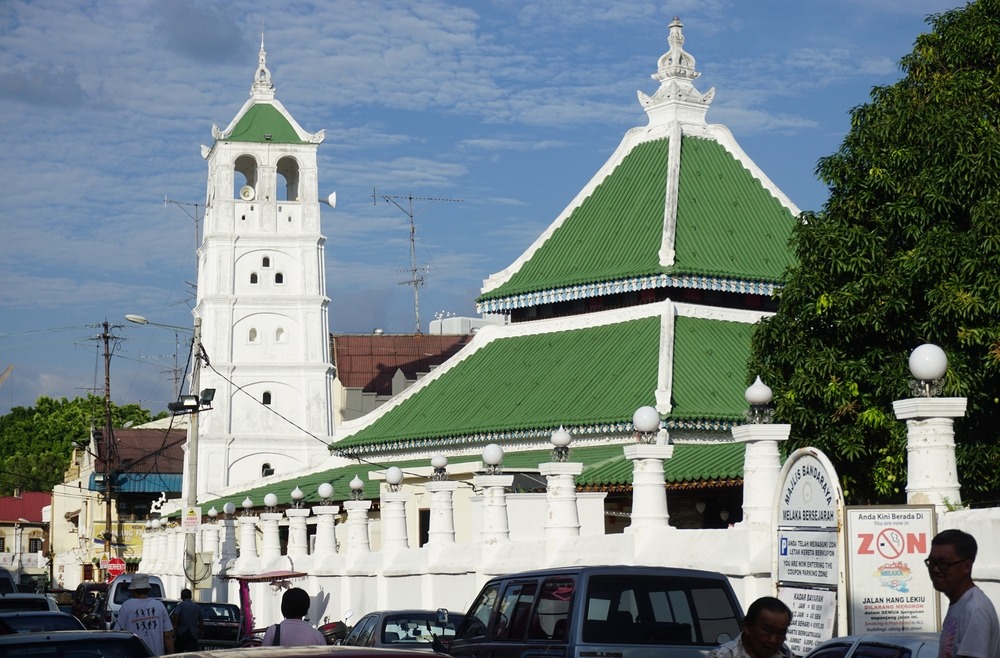
Mosquée de Kampung Kling
Fondée en 1748 sur la « rue de l'Harmonie » de Malacca, la mosquée de Kampung Kling associe minaret-pagode, carreaux européens et motifs hindous.
Temple de Cheng Hoon Teng
Au cœur de Malacca, le temple de Cheng Hoon Teng est le plus ancien temple en activité de Malaisie : architecture feng shui, décors Chien Nien et trois traditions sous un même toit.
Accommodation in Malacca
Want to discover this destination?
Our local advisors design your tailor-made trip.