Semenggoh Wildlife Centre
Semenggoh Wildlife Centre
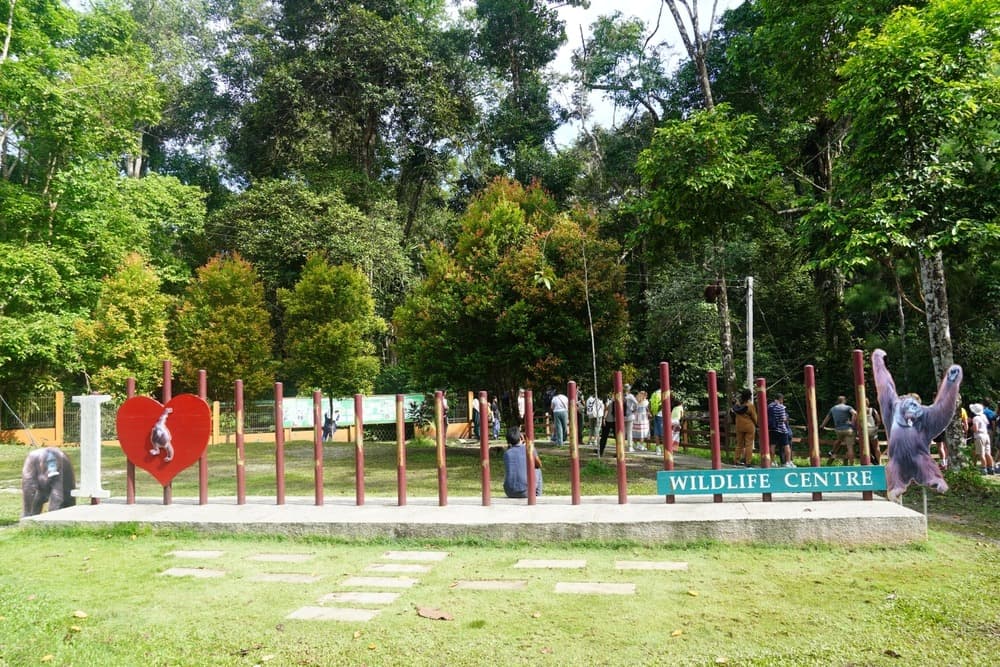
Located 24 km from Kuching, Semenggoh Wildlife Centre allows you to observe rehabilitated orangutans in semi-freedom during daily feeding sessions.
The Semenggoh Wildlife Centre is a forest reserve spanning 653 hectares situated 24 km from Kuching, in the state of Sarawak. It is one of three orangutan rehabilitation centres in Malaisie, and one of the rare places where these great apes live in semi-freedom within their natural habitat. Less frequented than Sepilok in Sabah, it offers a more intimate observation experience.
Why visit Semenggoh
Semenggoh offers the opportunity to observe Bornean orangutans in a protected forest, without cages or enclosures. The individuals present have been rehabilitated after illegal captivity, injury, or orphaning, then released into the reserve. Several have given birth to offspring who have never known captivity. Its proximity to Kuching makes it a feasible half-day excursion, accessible to travellers without heavy logistics.
Centre history
Founded in 1975, Semenggoh long welcomed orangutans victims of illegal captivity, orphans, or the injured, before gradually releasing them into the protected area. Over the decades, more than twenty orangutans have regained their freedom in this forest. With maximum capacity reached, rehabilitation activities have since been transferred to the Matang Wildlife Centre. Semenggoh remains nonetheless the best place in Sarawak to encounter these primates, who regularly return for food distributions.
What you will see on site
Feeding sessions structure the centre's daily rhythm. They take place twice daily, mid-morning and mid-afternoon. It is best to arrive early: some orangutans approach the headquarters before the announced time.
A forest ranger reviews safety guidelines before departure, then visitors follow a forest trail to the feeding platform. A ranger calls the orangutans by name while placing the day's food: bananas, pineapples, oranges, sugar cane, sweet potatoes, coconuts, papayas and hard-boiled eggs.
The primates then descend from the canopy towards trees close to the platform, with no guarantee they will respond immediately to the call. Some seize their meal quickly before disappearing; others linger between 30 and 60 minutes. The number of individuals present varies from 1 to 8 depending on the day. With a bit of luck, you may spot Ritchie, the dominant male, or a female accompanied by her young.
When to go
Observation is possible year-round, but the fruit season directly influences your chances of seeing orangutans at the platform. When the forest offers abundant resources (generally during peak fruit season), orangutans shun the platform and prefer to feed in the canopy. Conversely, during leaner periods, visits to the feeding point become more frequent. Check with the centre a few days before your visit: staff usually indicate recent attendance patterns.
How to get there from Kuching
- Bus No. 6: from Kuching, drops at the main entrance after approximately 45 minutes of travel. Modest fare.
- Grab or taxi: approximately 30 minutes' drive, moderate fare for Grab, higher for traditional taxi.
- Car or organised excursion: entrance fees are paid at the main gate, then a two-minute drive leads to the car park and headquarters.
Practical information
The centre opens only during two daily time slots, aligned with feeding sessions: one in the morning and one mid-afternoon. Outside these hours, access is not permitted. Entrance fees are modest, with reductions for children and free admission for the very young. On site, you will find restrooms, a gift shop and a small information gallery at headquarters. Bring sturdy shoes, insect repellent and light but covering clothing.
Nearby attractions
Semenggoh can easily be visited as a complement to a stay in Kuching, capital of Sarawak renowned for its riverfront, museums and cuisine. To extend your exploration of Malaisie, other sites merit a detour: the Mossy Forest in the Cameron Highlands for another approach to tropical forest, Fort Cornwallis in Penang, or the Cheong Fatt Tze Mansion in George Town.
Frequently asked questions
Frequently asked questions
No. The orangutans live in semi-freedom in the forest and are not required to come to the platform. The number of individuals varies from 1 to 8 depending on the day, and during fruit season, they may not appear at all.
Observation chances are better outside fruit season, when the forest's food resources become scarcer and primates return more readily to the platform. The morning session is generally quieter for visitor numbers.
Allow approximately 1.5 to 2 hours on site: briefing, walk to the platform, observation and return. Adding the round trip from Kuching, plan a full half-day.
Sepilok, in Sabah, is better known and more frequented. Semenggoh is a less touristy alternative, in a wilder forest setting, ideal if you are travelling on the Sarawak side.
Yes, the trail is short and accessible. Safety guidelines must be strictly observed: orangutans remain wild and powerful animals, to be observed at a distance.
To incorporate Semenggoh into a complete Borneo itinerary and beyond, consult our travels in Malaisie.
Interested in this visit?
We can include it in your personalised itinerary.