Kinabatangan River
Kinabatangan River
In the heart of Sabah, the Kinabatangan River unfolds one of Asia's finest river safaris: orangutans, pygmy elephants and fireflies at dusk.
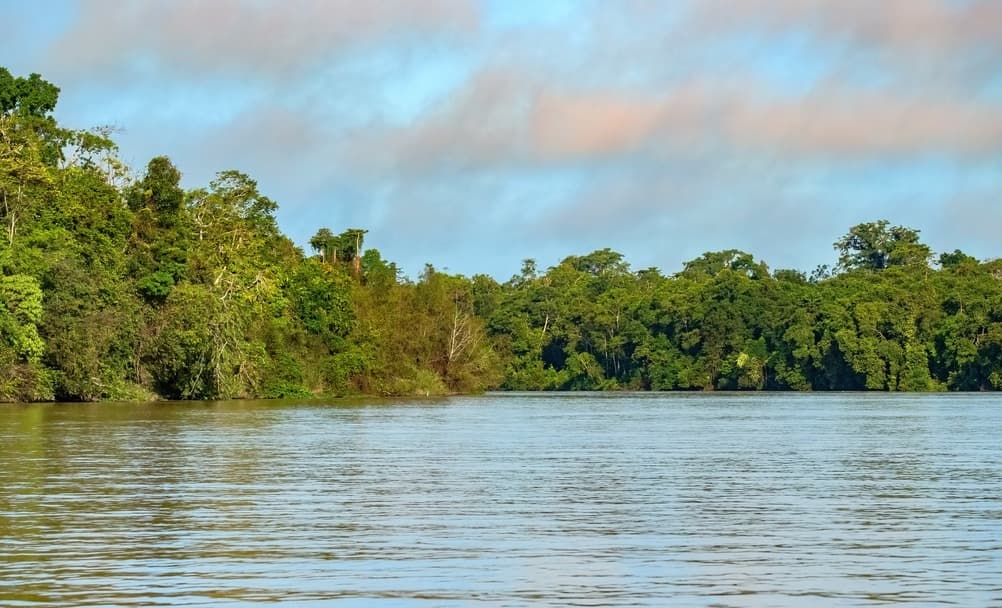
The Kinabatangan River, known as Sungai Kinabatangan in Malay, flows through the State of Sabah, on the island of Borneo. At 560 kilometres long, it is the principal waterway in the region and the second longest river in Malaysia. Its vast river basin covers nearly a quarter of Sabah's territory. Renowned for its ecological richness, this river offers the chance to observe orangutans, Borneo pygmy elephants, crocodiles, hornbills and various other animals in their natural habitat, during a cruise or jungle trek.
A glimpse into history
The Kinabatangan has not always looked the way it does today. The forest lining its banks was partially cleared as early as the late 19th century to make way for tobacco plantations, gradually abandoned from 1920 onwards.
In the 1950s, further clearing took place, driven by smallholders and large commercial operations. The 1970s then saw the emergence of logging ventures, swiftly converted into palm oil plantations.
By the early 21st century, no fewer than 20 palm oil mills operated on the river basin. Facing these pressures, a protected area of 27,800 hectares, the Kinabatangan Wildlife Sanctuary, was established in 2005 to preserve the rainforest and its fauna.
Today
The Kinabatangan enjoys recognised status on the international stage. On 8 September 2008, its estuary was inscribed on the Ramsar Register of Wetlands of International Importance.
Biodiversity here is remarkable. 50 species of mammals including 10 primates, approximately 200 bird species, 20 reptile species and more than 1,000 plant species have been recorded. Some are endemic, such as the Borneo pygmy elephant.
Along the lower course of the river, four villages welcome visitors: Batu Puteh, Bilit, Sukau and Abai. Here you'll find lodges as well as homestay arrangements, village associations that organise accommodation in local homes.
Tourism has played a decisive role in preserving the ecosystem. The influx of travellers has generated revenue for local communities and prompted authorities to prioritise conservation over land exploitation.
What to do on the Kinabatangan River?
Cruise to observe wildlife
River cruises form the centrepiece of a stay on the Kinabatangan. Lodges organise early morning and evening boat trips, the two times of day when wildlife is most active.
As you travel downriver, you may spot proboscis monkeys with their distinctive noses, hornbills with colourful beaks, crocodiles and occasionally orangutans. Encounters remain unpredictable, as the animals roam free. The longer you stay, the greater your chances of sightings.
Dedicated elephant spotting excursion
Some lodges organise special excursions dedicated to observing Borneo pygmy elephants. Local residents monitor the movements of these animals and report their positions to the lodges. A cruise is then organised towards the identified area.
This formula significantly increases your chances of a face-to-face encounter with these animals. A surcharge may apply due to its specialised organisation.
Nocturnal cruise to discover fireflies
The river also holds surprises after sunset. Some lodges arrange a night cruise to a village situated roughly one and a half hours from Sukau. There, thousands of fireflies light up in the trees along the riverbank, creating an almost surreal atmosphere.
Guided jungle trek
Jungle walks complement the cruises. Naturalist guides from the lodges accompany groups in the afternoon and evening to explore the forest more closely: plants, insects, small reptiles and mammals are on the agenda.
Guide quality is crucial for making the most of these outings. Enquire with your lodge about the expertise of its guides before booking.
The nearest airport is Sandakan (IATA code: SDK). There are no direct international flights to Sandakan, but regular domestic connections link the city from Kuala Lumpur, Kota Kinabalu, Lahad Datu and Tawau.
From Sandakan, the journey to the river takes approximately two hours by car. The vast majority of lodges include airport or town centre transfers in their packages, which considerably simplifies logistics.
Where to stay?
Accommodation options on the banks of the Kinabatangan are simple eco-lodges, typically rated between 2 and 3.5 stars. Comfort is functional rather than luxurious, but their location in the heart of nature is their true asset.
Two zones concentrate most of the lodges: Bilit and Sukau. The Bilit riverbank is quieter and more authentic, with fewer establishments. Sukau offers a wider range of accommodation.
A day excursion is possible, but it limits time for activities. Spending one or more nights on site allows you to multiply boat trips and increase your chances of observing wildlife. A stay of two to three days offers a better pace for discovering the region properly.
When to visit?
The dry season, from March to September, is the most favourable period to visit the region. Animals concentrate more around the river for drinking, which enhances viewing opportunities. Weather conditions are also more stable for cruises and treks.
The rainy season, from November to March, corresponds to the monsoon. The river regularly overflows and floods the surrounding forests.
Want to discover this destination?
Our local advisors design your tailor-made trip.