Perak Tong Cave Temple
Perak Tong Cave Temple
Buddhist sanctuary carved into the limestone of Gunung Tasek, north of Ipoh: towering Buddha, frescoes and viewpoint after 450 steps.
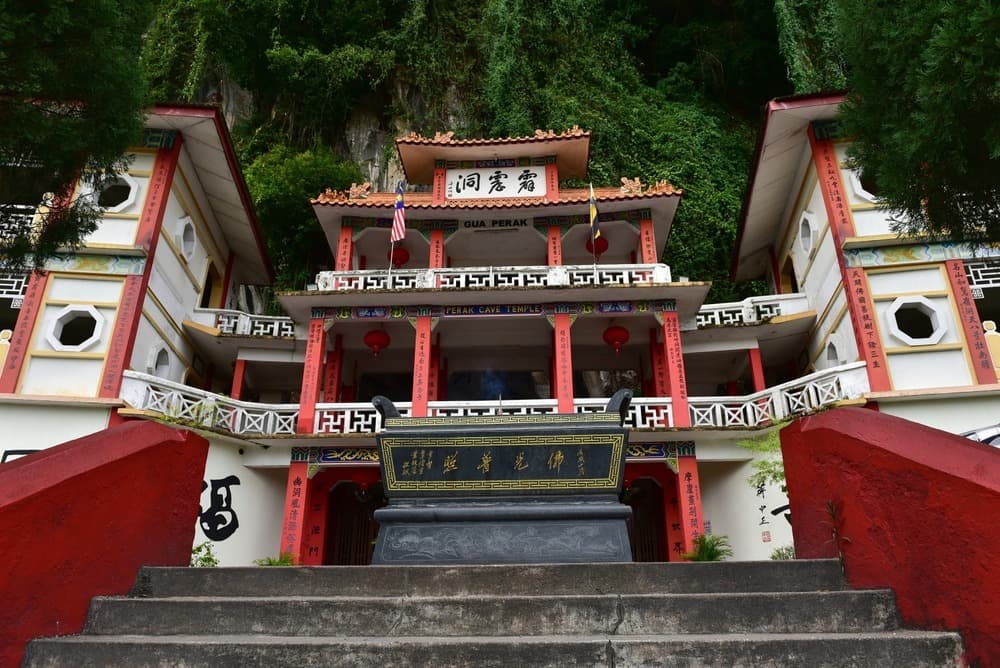
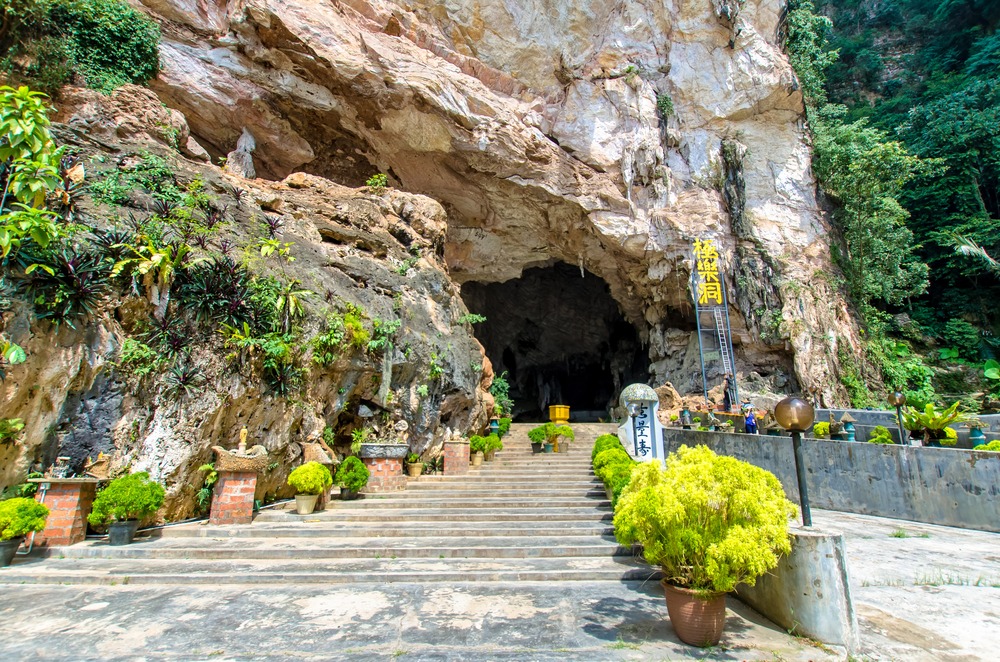
The Perak Tong cave temple occupies a natural cavity carved into the limestone massif of Gunung Tasek, in the northern suburbs of Ipoh. Developed from 1926 by a Chinese couple from Jiao-Ling province, this Buddhist sanctuary combines a spectacular cave, wall frescoes, a monumental Buddha statue and a viewpoint accessible after 450 steps of ascent.
Why visit Perak Tong
Ipoh, capital of Perak State, is surrounded by limestone peaks that shelter several cave temples. Perak Tong is one of the three main ones in the area, alongside Sam Poh Tong and Kek Lok Tong. Its distinctive features rest on three elements:
- a natural cave of considerable height, transformed into a sanctuary without altering the rock;
- a rich iconographic program, blending Chinese frescoes, calligraphy and Buddhist statuary;
- a panoramic viewpoint at the summit of the hill, accessible via an interior staircase that emerges on the cliff face.
The entire site can be visited freely, with an atmosphere still marked by local religious practice rather than mass tourism.
History of the sanctuary
In 1926, Chong Sen Yee and his wife Choong Chan Yoke, natives of the Chinese province of Jiao-Ling, discovered the natural cave at the foot of Gunung Tasek. After obtaining permission from Perak State, they undertook the development of the site.
Chong Sen Yee oversaw the design and construction of the sanctuary; his wife organized donation collection, both in Malaysia and abroad. The couple dedicated more than fifty years to the project. Chong Sen Yee died in 1980, followed by Choong Chan Yoke in 1983. Their son, Chong Yin Chat, took over the temple's direction and continued its expansion, signing some of the calligraphy visible today on the walls.
What to see on site
Inside the cave
After a narrow entrance passage, the cavity opens onto a space several dozen meters high. The main area is dominated by a seated Buddha statue approximately 12 meters tall, flanked by four protective deities.
The walls feature frescoes illustrating scenes from Chinese mythology and Buddhist texts, as well as numerous calligraphies, some by the hand of Chong Yin Chat himself. Several secondary altars host statues, including an 18-armed female figure, generally identified as a representation of Guan Yin, the goddess of Mercy.
The ascent and the view
Behind the main altar, a staircase descends into the rock then emerges on the hillside. The steps then climb the slope through several shelter pavilions. The ascent totals 450 steps. At the summit, a two-story pavilion opens onto the northern suburbs of Ipoh, the neighboring industrial zone and the limestone hills that line the horizon.
Practical information
- Fee: free entry; donations are appreciated for temple maintenance.
- Hours: daytime opening, generally from morning until late afternoon. Check current hours on site or through your accommodation.
- Visit duration: allow 1 hour without the ascent, 1.5 to 2 hours with the climb to the panoramic pavilion.
- Dress code: shoulders and knees covered, as in any Buddhist temple. Shoes should be easy to remove for certain areas.
- Good to know: bring water, the staircase is long and exposed. Avoid the hottest hours.
How to get there
The temple is located approximately 6 km north of Ipoh city center, along Federal Route 1 (Jalan Kuala Kangsar), near the neighborhoods of Taman Loke Lim and Taman Permai.
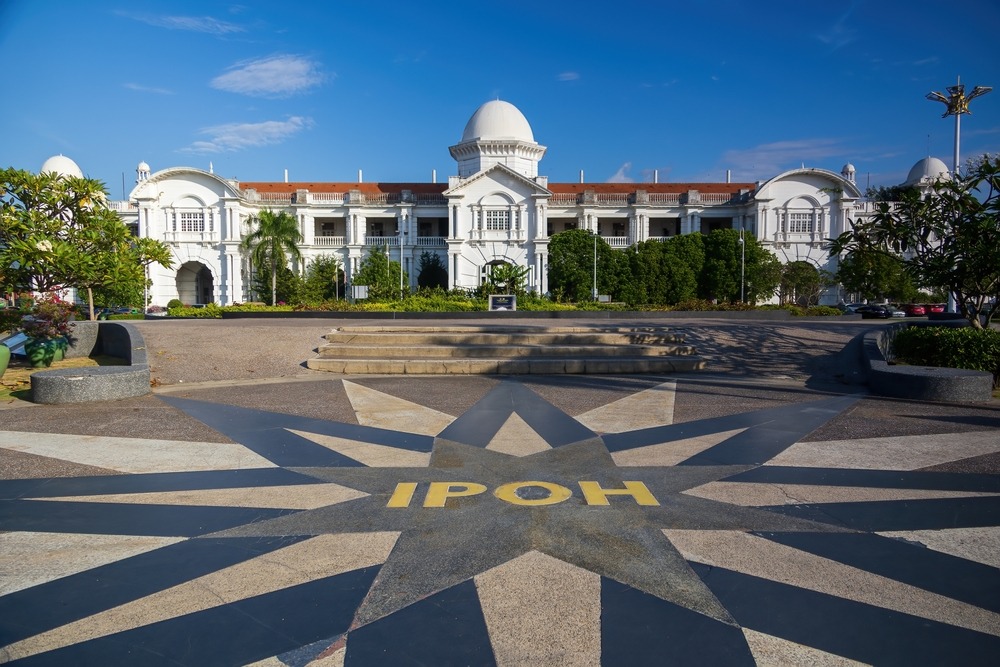
- From Ipoh city center: 10 to 15 minutes by taxi or ride-share from the historic railway station. Follow Federal Route 1 northward.
- From the North-South Expressway: exit at the Ipoh Utara interchange (exit 140), the temple is just minutes away.
- By public transport: limited service, taxi remains the most practical option.
Nearby attractions
The Ipoh region concentrates several complementary sites, easy to combine over a half-day or full day:
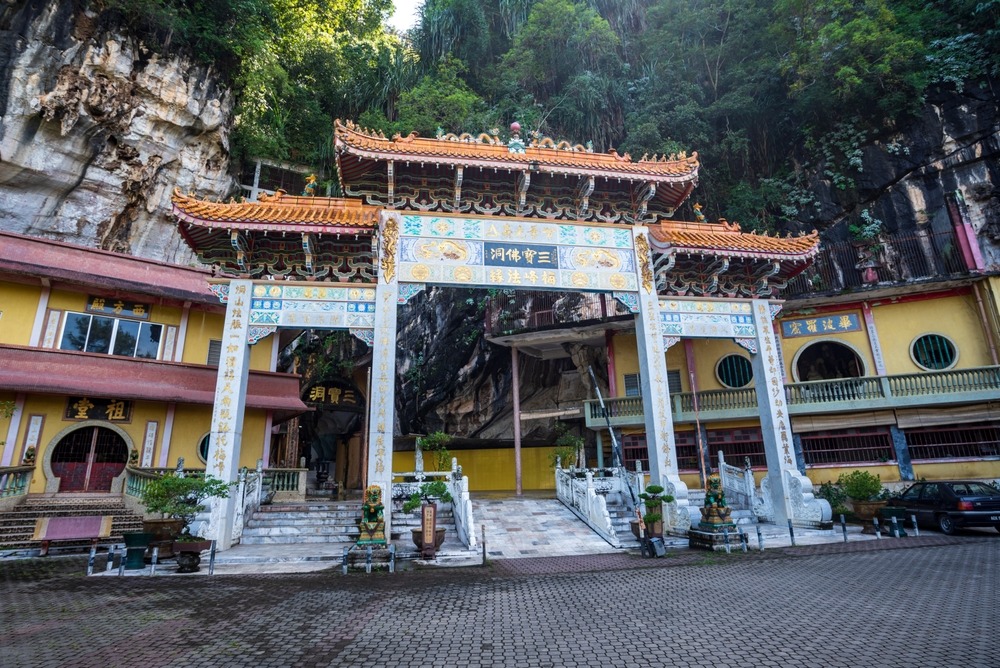
- Kek Lok Tong temple: another major cave temple in Ipoh, located south of the city, extended by a landscaped garden.
- Ipoh: colonial old town, street art, Cantonese gastronomy and heritage cafés.
- Batu Caves: at a greater distance, near Kuala Lumpur, another major Hindu cave sanctuary in the country.
- Penang Hill: approximately 2.5 hours' drive away, a natural stop to the northwest.
Frequently asked questions
Frequently asked questions
Include Perak Tong in your journey
The temple fits naturally into an itinerary combining Ipoh, Cameron Highlands and the west coast. To build a customized circuit, explore our Malaysia travel suggestions and speak with our destination specialists.
Interested in this visit?
We can include it in your personalised itinerary.