Cheng Hoon Teng Temple
Cheng Hoon Teng Temple
At the heart of Malacca, Cheng Hoon Teng temple is Malaysia's oldest active temple: feng shui architecture, Chien Nien décor and three traditions beneath one roof.
The Cheng Hoon Teng temple, also known as the Green Cloud Temple, is considered the oldest active temple in Malaysia. Located at 25 Jalan Tokong in Malacca, it spans 4,600 m² and practices three doctrinal systems: Buddhism, Confucianism and Taoism. This unique combination has made it a central landmark for the local Chinese community for nearly four centuries.
Why Visit Cheng Hoon Teng Temple
The site stands out for three elements rarely found together: documented antiquity dating back to the 17th century, ornamental quality recognized by UNESCO, and continuous religious activity. Unlike many temples that have become purely museums, Cheng Hoon Teng remains a place of prayer regularly visited by devotees.
Its location on Jalan Tukang Emas, known as the "Street of Harmony", places it just metres away from Kampung Kling Mosque and Sri Poyatha Moorthi Hindu temple: three religions coexist on the same street, a concrete illustration of the cultural blend that characterizes Malacca.
History
The exact date of the temple's founding remains debated. Official records mention the year 1645, during the Dutch period, and name Kapitan Tay Kie Ki — head of the Chinese community appointed by colonial authorities — as the founder. However, an inscription evoking the 28th year of the Ming dynasty's Wanli reign (around 1600) suggests that a more modest structure already existed on the site before the official foundation.
The temple served as more than just a spiritual centre: it was long the administrative seat of the Kapitans, an internal governing body for the Chinese community. Several expansion campaigns were undertaken over successive Kapitans' tenures, including a major renovation in 1801 that enriched the complex with additional structures.
After the abolition of the Kapitan system, management was entrusted to a council of notables from the Chinese community, still in operation today. In 2003, UNESCO awarded the temple a prize for the exemplary quality of its architectural restoration, a distinction that celebrates the work done on the original décor.
What to See
Architecture and Feng Shui Principles
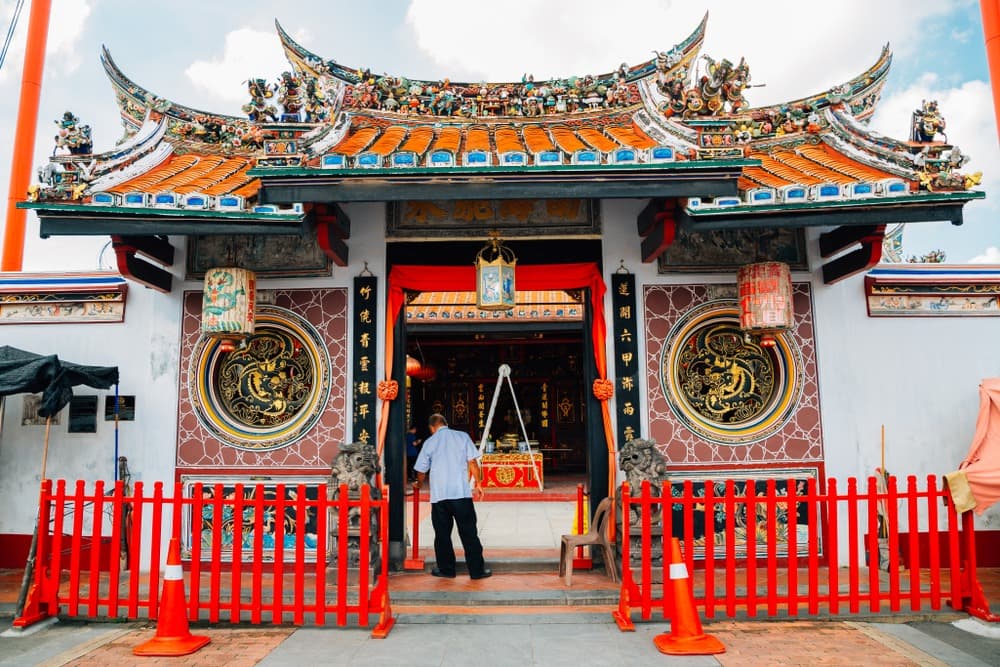
The building is divided into three sections: a stone foundation, pillars supporting the roof, and wooden consoles supporting the transverse beams. This open structure allows air to circulate through halls heavily scented by incense.
The orientation respects feng shui principles: a clear view of the river at the front, elevated terrain on either side to protect the site. In front of the main hall stand two seven-metre-high red poles, a distinctive architectural element rarely found in Malaysia.
Décor and Ornaments
- Gilded phoenixes and dragons carved using the Chien Nien technique, which involves assembling porcelain fragments to form colourful reliefs.
- Chai Hui frescoes depicting episodes from the Three Kingdoms, executed in Chinese ink and tempera.
- Statues and artefacts enhanced with gold leaf gilding.
- Sculptures of mythical dragons and sages in ornate dress.
Prayer Halls
The grand main hall is dedicated to Guan Yin, the goddess of mercy. Several secondary sanctuaries complete the complex: one venerates Chinese deities of wealth, longevity and prosperity, another houses ancestral tablets intended for family homages. Facing the sanctuary, on the opposite side of the street, a traditional opera theatre hosts performances during major festivals.
When to Visit
The temple comes alive especially during major dates in the Chinese calendar:
- Chinese New Year (January–February): lion and dragon dances, red decorations, crowds gather.
- Wesak (May): Buddhist festival celebrating the birth, enlightenment and death of Buddha.
- Festival of the Hungry Ghosts (August): offerings made to wandering spirits.
- Mid-Autumn Festival (September–October): lanterns lit and mooncakes shared with family.
Outside these periods, a morning visit allows you to observe daily rituals in a quieter atmosphere.
Practical Information
Entrance is free, though voluntary contributions help with the temple's upkeep. The temple opens from morning until early evening; hours may vary on festival days. Modest dress is recommended (shoulders and knees covered), and shoes should be removed before entering the halls. Photography is generally tolerated outside; inside, it's better to refrain from photographing altars in use and worshippers at prayer; when in doubt, a sign to the caretaker will clarify.
Allow 30 to 45 minutes for a mindful visit, longer if you also visit the neighbouring buildings on the Street of Harmony.
How to Get There
The temple is located in Malacca's historic centre, a short walk from most accommodation in the area. From Dutch Square, cross the Tan Kim Seng bridge, turn right into Lorong Hang Jebat, then left into Jalan Tukang Besi which connects to Jalan Tokong: the temple appears on the left. Access is also easy from the Jonker Street quarter, just a few minutes' walk away.
Nearby Attractions
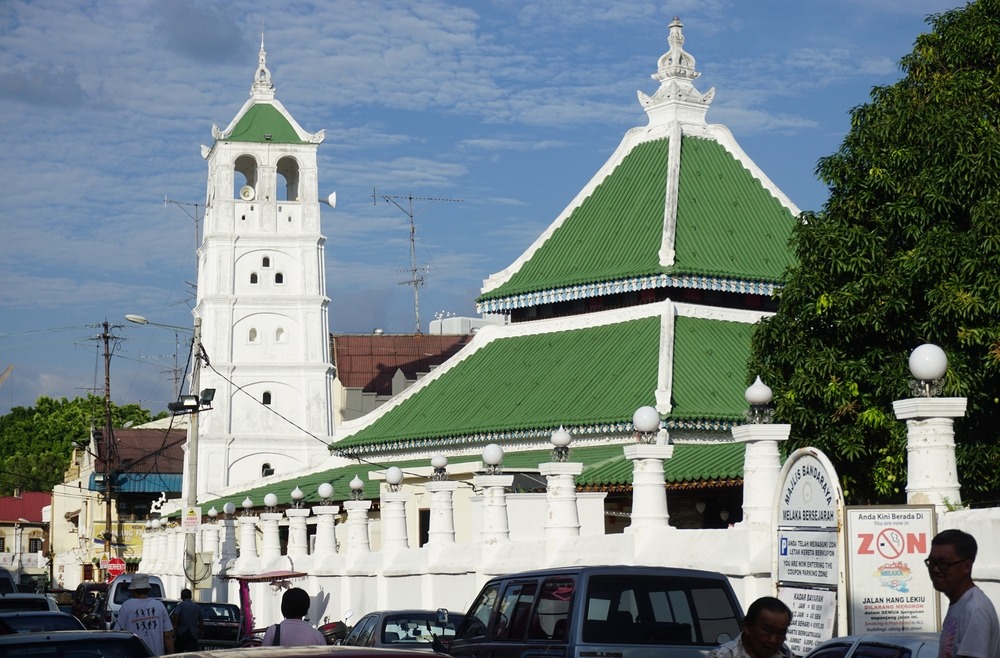
- The Padang Mosque, another emblematic place of worship in Malaysia's heritage.
- Kampung Kling Mosque and Sri Poyatha Moorthi Hindu temple, immediate neighbours on the Street of Harmony.
- Jonker Street and its weekend night market, just a few steps away.
- To explore more Chinese temples in Malaysia: Kek Lok Tong temple and Perak Tong cave temple, both in Ipoh.
Frequently Asked Questions
Frequently asked questions
No ritual attire is required, but clothing that covers the shoulders and knees is recommended out of respect for worshippers. Shoes are removed before entering the interior halls.
Photography is generally permitted in courtyards and outside. Inside, avoid photographing active altars and worshippers at prayer; when in doubt, a sign to the caretaker will help clarify the situation.
30 to 45 minutes are sufficient to tour the entire complex. Combined with neighbouring Kampung Kling Mosque and Sri Poyatha Moorthi temple, allow 1.5 to 2 hours.
Yes, the temple remains an active place of worship. Festivals like Chinese New Year, Wesak and the Mid-Autumn Festival offer the most spectacular moments, with dances, offerings and sometimes opera performances in the neighbouring theatre.
To Learn More
Cheng Hoon Teng temple fits naturally into a heritage circuit exploring Malaysia's Chinese, Indian, Malay and colonial legacies. To create a tailor-made itinerary incorporating Malacca and other key cultural sites in the country, consult our Malaysia travel suggestions.
Interested in this visit?
We can include it in your personalised itinerary.