Kek Lok Tong Temple
Kek Lok Tong Temple
A Buddhist sanctuary carved into a limestone mountain in Ipoh, Kek Lok Tong combines a three-level cave, manicured gardens, and lakes—all freely accessible.
The Kek Lok Tong temple is one of the most visited cave sanctuaries in Ipoh, in Perak State, in the northwest of peninsular Malaysia. Set within a limestone cavern and extended by a sprawling landscaped park, the site blends Chinese religious architecture, geological formations, and public gardens. Entry is free and the self-guided visit takes 1 to 2 hours depending on your pace.
Why visit Kek Lok Tong
Kek Lok Tong stands apart from other Buddhist temples in the region thanks to three distinctive features: its multi-level cave adorned with sculptures and stalactites, a fascinating industrial past marked by mining operations, and a rear park equipped with unusual facilities for a place of worship (a reflexology path, pedalo and bicycle rentals). The site remains active with worshippers, making it a living sanctuary rather than merely a tourist attraction.
Temple history
The name Kek Lok Tong means "cave of great happiness." The temple was founded in the 1920s as a Buddhist sanctuary and gradually expanded to welcome both worshippers and visitors.
During the 1960s, it was closed due to an iron ore extraction project undertaken in the limestone mountain that houses it. Its spiritual purpose was restored in the 1970s, after mining operations ceased. Traces of this industrial period remain visible at the rear of the grounds, partly concealed by vegetation.
What to see
The entrance and main grotto
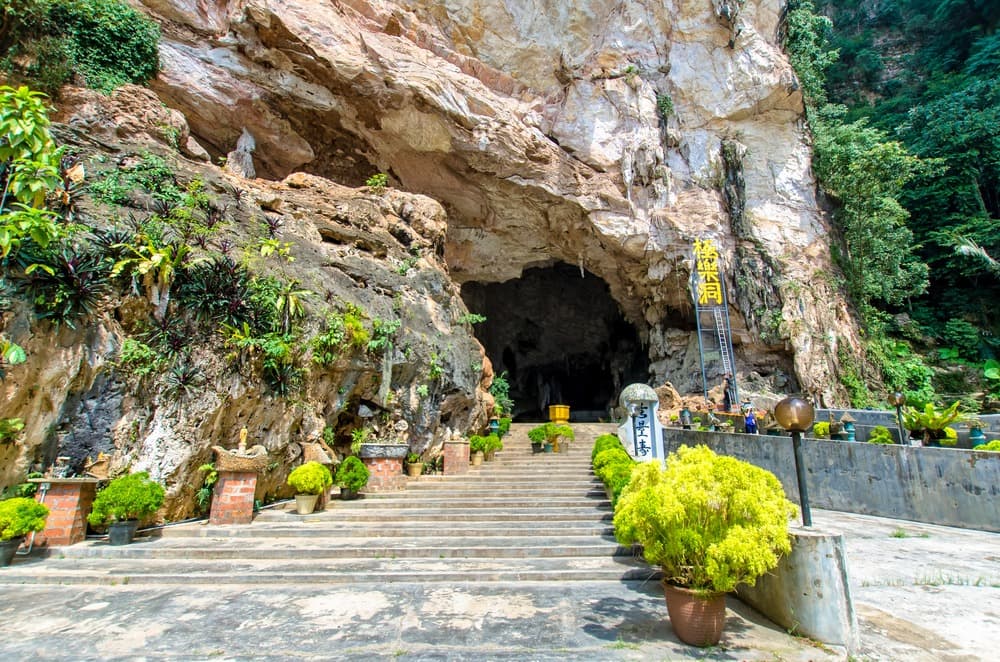
Access begins at the foot of a towering limestone cliff face. A large statue of Kuan Yin, the Chinese goddess of compassion, marks the entrance, flanked by stone lions. A koi fish pond precedes the stairway leading into the grotto; fish food is sold at the interior shop. A wheelchair-accessible ramp runs alongside the stairs.
The temple comprises three chambers spread across multiple levels. The main hall houses an altar, Buddhist sculptures, and a statue of Confucius. The interior shop sells incense sticks and personalized lotus candles with wishes, which visitors light and place on metal stands at the back of the grotto.
Several staircases lead to upper levels. The 2nd and 3rd level platforms offer sweeping views over the entrance, parking area, and surrounding limestone formations. A side staircase on the right before the exit to the gardens allows for close observation of limestone formations and stalactites.
Note: the cave's moisture makes floors slippery. Exercise caution on stairs and walkways.
Gardens and lakes
The grotto exit opens onto a vast landscaped park dotted with lakes, walking paths, and pagodas. At the foot of the steps, a series of statues depicts various Buddhist figures, and a reflexology path with pebbles invites barefoot walks.
A trail encircles the main lake, home to koi and turtles; signs prohibit feeding them. Monkeys occasionally appear near the stairs—keep your belongings close.
Activities available
- Bicycles for 2 or 4 people available for rent to explore the gardens.
- Duck-shaped pedalos on the small lake at the base of the cliffs; life jackets provided; rentals last approximately 30 minutes.
- Rentals operate Wednesday through Monday and are closed Tuesdays.
Practical information
- Admission: entry to the sanctuary and gardens is free. Only bicycle and pedalo rentals are charged. Donations and purchases at the shop support site maintenance.
- Hours: open daily during daylight. Verify current hours before your visit.
- Duration: allow 1 to 2 hours to explore the grotto, access upper platforms, and tour the lake. Add more time if using rental equipment.
- Dress code: shoulders and knees covered recommended inside the grotto.
- Accessibility: wheelchair-accessible ramp at the entrance; upper levels require stairs.
How to get there
The temple is located in the Gunung Rapat area, about 20 minutes by car from Ipoh's historic centre. There is no public transport to the site—a private vehicle or Grab taxi is necessary. Free parking is available for visitors. A Grab fare from central Ipoh remains affordable, though prices vary by time and pickup location.
Nearby attractions
The Ipoh region has several other cave temples and natural sites that pair well with Kek Lok Tong for a half-day or full-day itinerary:
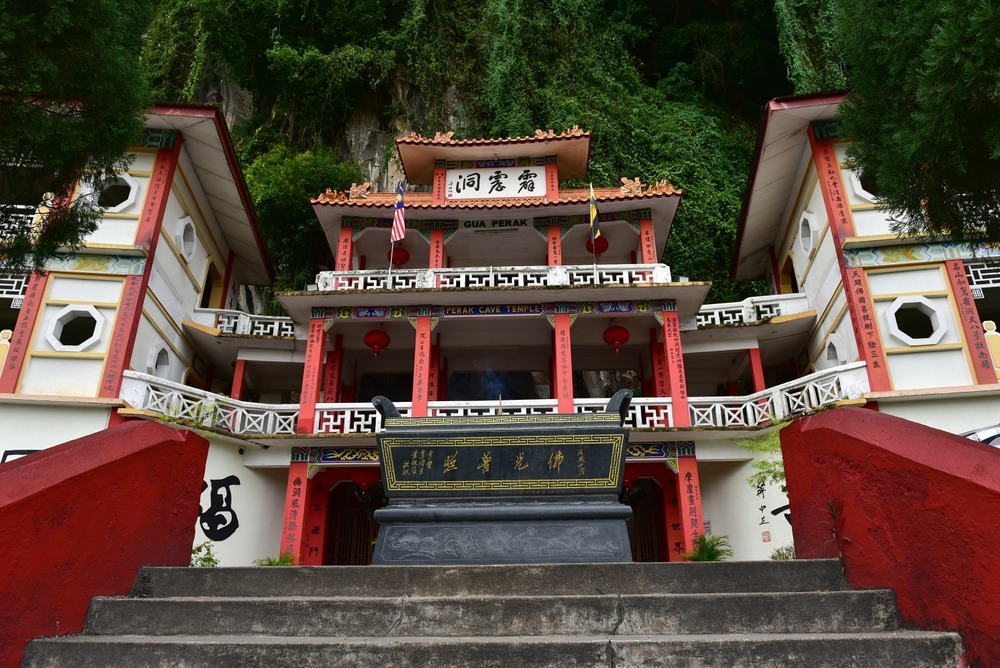
- The Perak Tong cave temple, another Buddhist sanctuary carved into limestone, north of Ipoh.
- The Batu Caves, near Kuala Lumpur, to extend the cave temple theme.
- Penang Hill, accessible from Penang Island, a few hours' drive away.
Frequently asked questions
Frequently asked questions
Yes, entry to the sanctuary and gardens is free. Only bicycle and pedalo rentals, as well as purchases at the shop (incense, koi food, lotus candles), are charged.
Plan 1 to 2 hours to explore the grotto, climb to the upper platforms, and walk around the lake. If renting a pedalo or bicycle, allow half a day.
There is no direct public transport. The easiest option is the Grab app from central Ipoh or the railway station; the journey takes about 20 minutes.
A wheelchair-accessible ramp is provided alongside the entrance stairs, allowing access to the main grotto. Upper levels and certain platforms remain accessible only by stairs.
Yes. Perak Tong, located north of the city, is the other major cave temple in Ipoh. Both sanctuaries are easily visited on the same day by Grab or rental car.
Plan your trip
Kek Lok Tong fits well into an itinerary from Kuala Lumpur or heading towards Penang. To build your route, explore our bespoke Malaysia trips.
Interested in this visit?
We can include it in your personalised itinerary.