Sultan Abdul Samad Jamek Mosque
Sultan Abdul Samad Jamek Mosque
At the confluence of the Klang and Gombak rivers, Kuala Lumpur's oldest mosque blends Indo-Saracenic architecture with direct access to the heart of the city's historic district.
At the confluence of the Klang and Gombak rivers, the Sultan Abdul Samad Jamek Mosque is one of the oldest mosques in Kuala Lumpur. Built in the early twentieth century in Indo-Saracenic style, it remains a place of worship today while welcoming non-Muslim visitors outside prayer times.
Why visit the Sultan Abdul Samad Jamek Mosque
The mosque offers three compelling reasons to visit. First, its geographical position: it stands precisely at the junction of the two rivers that gave Kuala Lumpur its name ("muddy confluence" in Malay). It is thus a foundational landmark of the city.
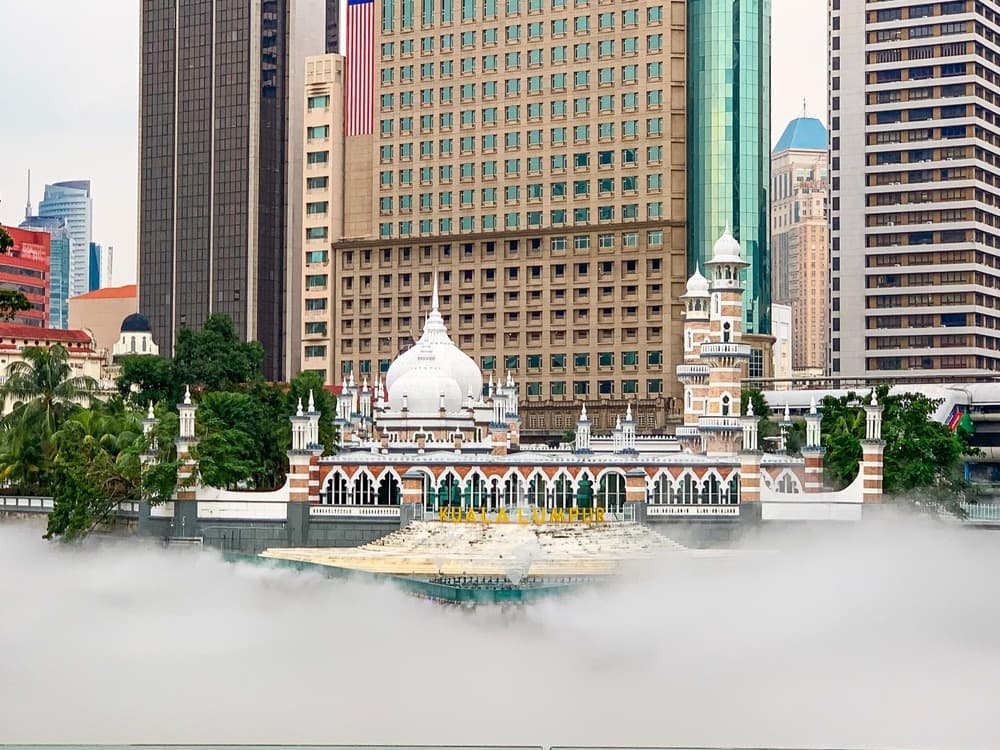
Second, its Indo-Saracenic architecture, designed by the British architect Arthur Benison Hubback, exemplifies the colonial syncretism of the era: Mughal motifs, bulbous domes, minarets in red and white brick.
Finally, access is immediate: the Masjid Jamek LRT station serves the site directly, and the mosque sits between Chinatown, Little India and Dataran Merdeka square, making it a logical stop on a day exploring the historic centre.
History of the mosque
The building was constructed on the site of a former Malay cemetery, at the confluence of the Klang and Gombak rivers. Before its construction, several small mosques existed in the area, but no substantial structure served the growing Muslim community of Kuala Lumpur.
The project was entrusted to British architect Arthur Benison Hubback, already known for designing the city's railway station. He chose an Indo-Saracenic style inspired by Mughal architecture from northern India. The foundation stone was laid on 23 March 1908 by the Sultan of Selangor, Sir Alaeddin Sulaiman Shah, and the official inauguration took place on 23 December 1909.
Construction costs totalled 32,625 Straits dollars, jointly financed by the Malay community and the British colonial administration. For more than half a century, the building served as the capital's principal mosque, until the inauguration of Masjid Negara, the national mosque, in 1965.
The site has undergone several transformations: the addition of a roof over the previously open forecourt, a comprehensive renovation in 1984, and the restoration of a dome that collapsed after heavy rainfall in 1993. In 2017, the mosque was officially renamed Sultan Abdul Samad Jamek, in tribute to the fourth Sultan of Selangor.
What to see on site
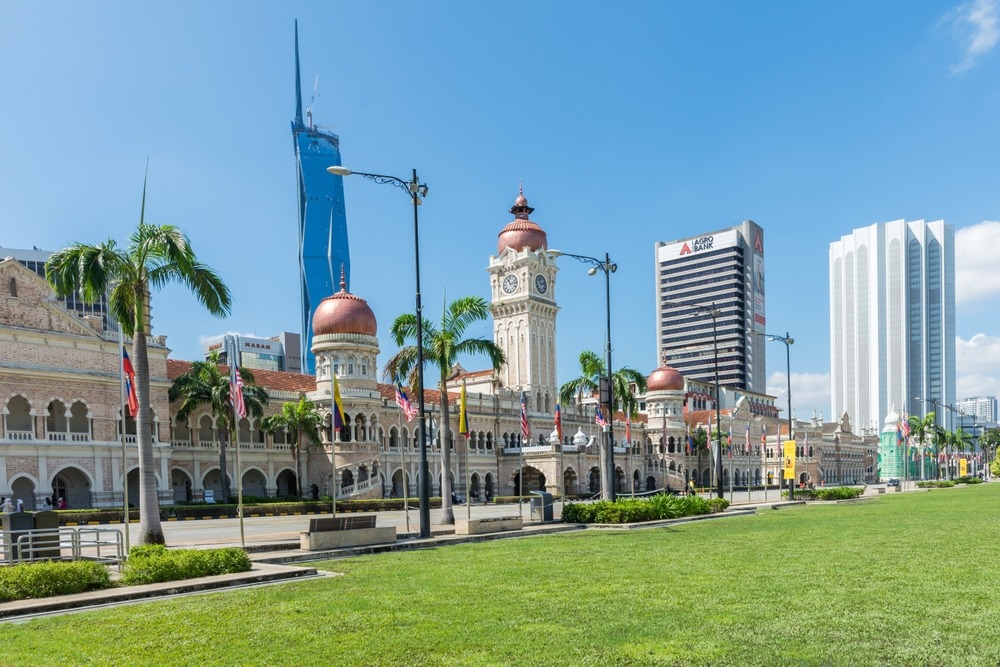
The exterior is dominated by three domes—the main one reaching approximately 21 metres—and two minarets with alternating pink and white bands in brick and plaster. The polychrome materials and contrast with the modern skyscrapers nearby give the site a silhouette recognisable from Dataran Merdeka.
Inside, the prayer hall unfolds beneath the cupolas. You'll observe marble columns, worked stained glass and floors covered with carpets. The atmosphere remains that of an active place of worship: visitors are invited to move in silence, particularly near those at prayer.
A small photograph gallery, located in an annexe, traces the site's history, its construction and various restorations. The mosque also serves as a community centre, hosting religious, educational and social activities.
Practical information
Opening hours and admission
Visits are free. The mosque opens to non-Muslims outside the five daily prayers, generally mid-morning and mid-afternoon. On Friday, the midday congregational prayer limits visiting hours. Informal guided tours can be arranged on site.
Dress code
As a place of worship, modest dress is required:
- Shoulders and legs covered for everyone
- Long trousers for men
- Headscarf covering the hair for women
Robes and headscarves are lent free of charge at the entrance if needed. Shoes are removed before entering the prayer hall and left on the designated shelves.
When to visit
Morning slots are generally the quietest. Avoid Friday around midday (congregational prayer) and be mindful during Ramadan, when visiting hours may be restricted. Late afternoon offers the most favourable light for photographing the two-tone brickwork of the minarets.
How to get there
The mosque is located on Jalan Tun Perak, between Chinatown and Little India, in immediate proximity to Dataran Merdeka.
By LRT
- Masjid Jamek station, adjacent to the site, served by the Kelana Jaya, Sri Petaling and Ampang lines
- Pasar Seni or Bank Negara stations, about a ten-minute walk away
By bus
- Stops at Bsn Lebuh Ampang (KL117) and LRT Masjid Jamek (KL107), a few minutes' walk away
- Other nearby stops: Muzium Telekom, Laman Tunku Abdul Rahman, Heritage Trail
What to see nearby
The mosque's central location makes it easy to connect with other Kuala Lumpur sites or expand your discovery to the rest of the country:
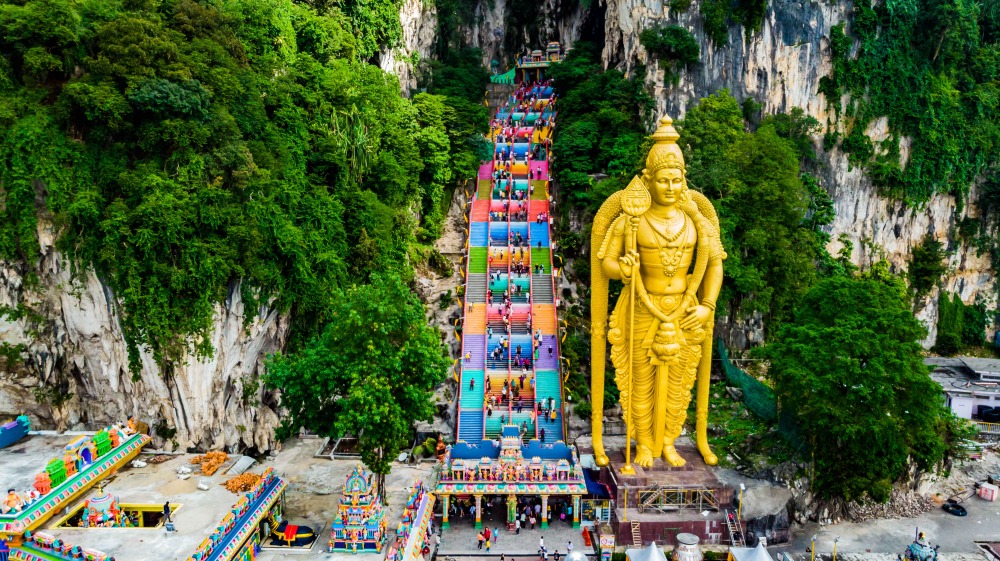
- Batu Caves, a Hindu sanctuary half an hour to the north
- Padang Mosque, another remarkable religious building
- Kek Lok Tong Temple, to compare Muslim and Buddhist architecture
Frequently asked questions
Frequently asked questions
Include the mosque in your trip
The Sultan Abdul Samad Jamek Mosque fits naturally into an itinerary combining colonial heritage, historic quarters and Malaysian natural sites. To build a bespoke journey, consult our Malaysia travel suggestions.
Interested in this visit?
We can include it in your personalised itinerary.