Batu Caves
Batu Caves
13 km from Kuala Lumpur, Batu Caves combine Hindu temples, a 43 m Murugan statue, protected biodiversity and 272 mythical steps.
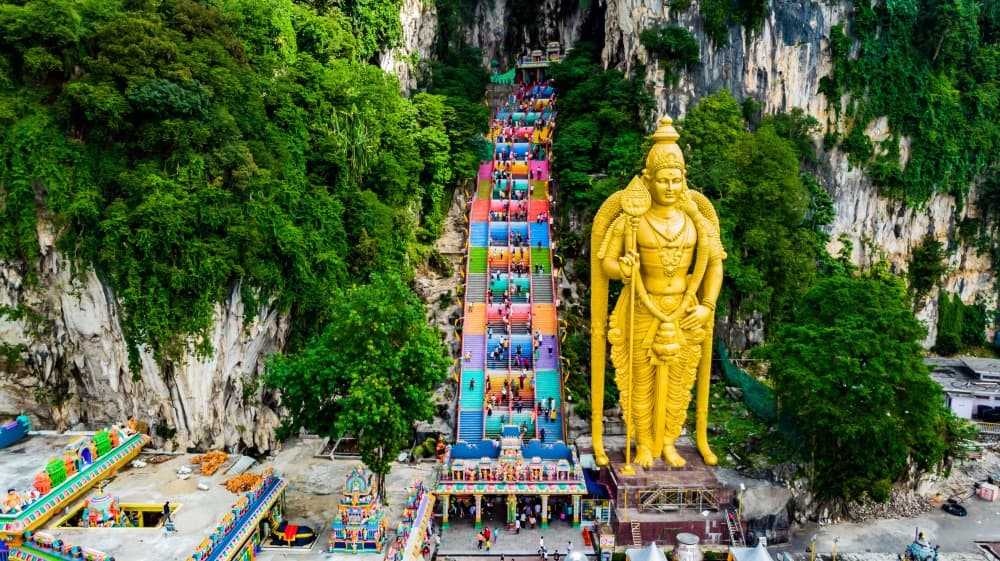
Thirteen kilometres north of Kuala Lumpur, Batu Caves form a complex of limestone cavities carved into a hillside overlooking the plain. The site blends geology, biodiversity and Tamil Hindu worship, watched over by a gilded statue 43 metres high representing the god Murugan, rising above the 272 steps that lead to the main sanctuary.
Why visit Batu Caves
Few sites concentrate so many layers of history in a single location. The caves first served as shelters for the Temuan, an Orang Asli people, before being exploited in the 19th century for their guano and then transformed into a major centre of worship for Murugan. Today they house several temples, protected biodiversity (bats, endemic fauna, calciphile flora) and one of Southeast Asia's most significant religious gatherings, the Thaipusam festival.
A visit combines spiritual dimension, natural history and, for the more active, rock climbing routes on the north-east face. Access from central Kuala Lumpur is quick and economical, making it one of the most accessible day trips from the capital.
History of the site
The caves formed over 400 million years ago in a limestone massif. Long before they became a place of worship, they served as natural shelters for the Temuan, an indigenous people belonging to the Orang Asli ethnic group.
In the 1860s, Chinese settlers extracted bat guano from the caves, used as fertiliser. In 1878, American naturalist William Hornaday explored and documented the site.
Religious development was the work of K. Thamboosamy, a Tamil merchant settled in Malaisie. Struck by the resemblance between the main cave entrance and the vel, Murugan's lance, he founded the temple in 1891. As early as 1892, the first Thaipusam celebration transformed the site into a pilgrimage destination. Wooden steps were built in 1920, then replaced in 1940 by the 272 concrete steps still in use today.
What to see on site
Temple Cave
This is the main cave, accessible via the 272 steps that start from the base of the gilded Murugan statue, 43 metres high and often cited as one of the world's largest representations of the god. The cavity reaches nearly 100 metres high under the vault and houses the 1920 temple, around which stalactites and stalagmites create a mineral setting. Access is free.
Ramayana Cave
Located on the left side of the site, it opens onto a 15-metre Hanuman statue inaugurated in 2001. Inside, a series of sculpted and painted scenes illustrate episodes from the Ramayana. These include Kumbhakarna, brother of Ravana, depicted during the scene of his awakening, his companions attempting to rouse him from his deep sleep. Entry is charged at a modest fee.
Dark Cave
Dark Cave protects a rare underground ecosystem: 21 species of bats, including flying foxes, endemic trapdoor spiders, scorpions, beetles and a native cockroach species feeding on guano. Access is restricted and subject to guided tour availability, put in place to preserve the environment. Check opening conditions before visiting.
Cave Villa and massif flora
Cave Villa brings together several cavities furnished with sculptures and pools. Across the entire site, botanists have recorded 269 species of vascular plants, 56 of which are calciphiles specifically adapted to limestone substrates. Entry is charged at a modest fee.
Rock climbing on the north-east face
The cliffs around Damai caves on the north-east face of the massif host several climbing routes reaching up to 150 metres. Some local operators also organise abseiling and caving expeditions. This activity is suited to experienced climbers or those under professional guidance.
Long-tailed macaques
The site is home to long-tailed macaques, accustomed to human presence. They can be aggressive, particularly around bags and food. Keep your belongings secured, do not feed them and maintain your distance.
When to visit
The caves can be visited year-round. The equatorial climate of the Kuala Lumpur region mainly means anticipating downpours, which can make the steps slippery late in the day.
The highlight of the calendar is the Thaipusam festival, celebrated between January and February according to the Tamil calendar. Thousands of devotees converge on the site, some carrying kavadi, ornate structures fixed to the body. The procession starts from Sri Mahamariamman temple in central Kuala Lumpur and reaches the caves on foot. Crowds are substantial: allow plenty of time, bring water, and accept the idea of moving slowly through the throng. Outside the festival period, an early morning arrival allows you to avoid both the heat and the crowds.
How to get there from Kuala Lumpur
- By train: KTM Komuter connects KL Sentral to Batu Caves station with direct service. This is the simplest and most economical option.
- By bus: line 11, departing from the Bangkok Bank stop near Central Market, serves the site (confirm locally, as the network changes).
- By taxi or ride-hailing: journey of approximately 30 to 45 minutes from the centre depending on traffic.
Practical information
- Hours: daytime opening with extended schedule. Aim for an early arrival for coolness and quiet.
- Admission: Temple Cave is free; Ramayana Cave, Cave Villa and Dark Cave are charged at modest fees.
- Dress code: shoulders and knees covered, the site is an active place of worship.
- What to bring: water, sturdy shoes for the 272 steps, a closed bag against macaques.
- Duration: allow 2 to 3 hours for a comfortable visit, more if you explore several caves.
Combine with
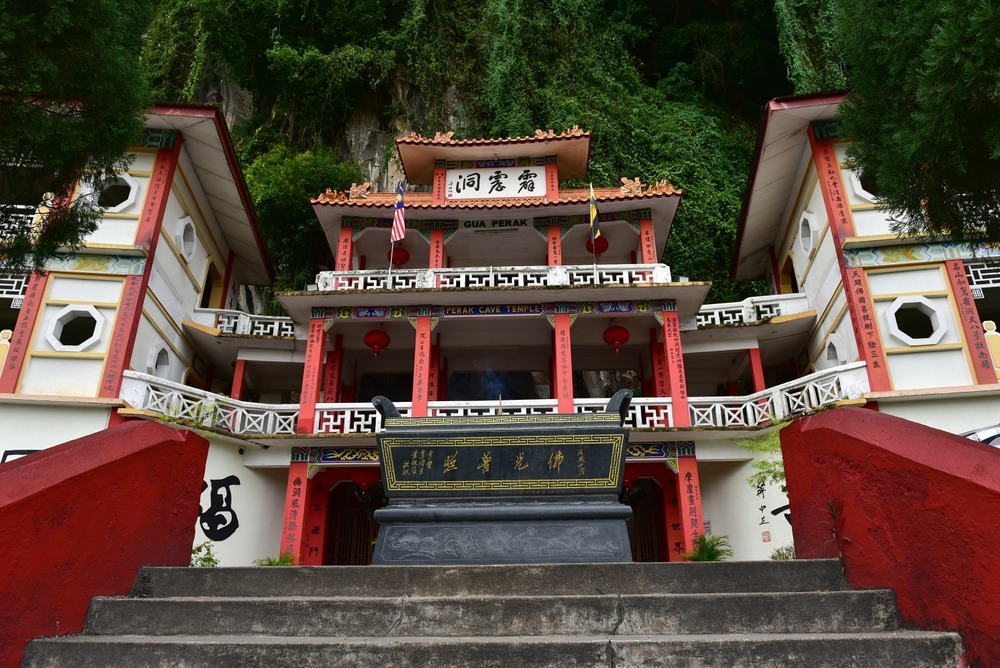
Batu Caves are typically visited as a half-day trip from Kuala Lumpur, leaving time to explore the capital as well. To extend your temple experience, Kek Lok Si temple in Penang and Kek Lok Tong temple near Ipoh offer two other approaches to the sacred in Malaisie. On the nature side, Bako National Park and Batang Ai National Park, both in Borneo, provide contrast between religious heritage and tropical ecosystems.
Frequently asked questions
Frequently asked questions
Allow 2 to 3 hours for Temple Cave, Ramayana Cave and a look around the surroundings. A half-day is sufficient from Kuala Lumpur, including travel time.
Access to Temple Cave, the main and most visited, is free. Ramayana Cave, Cave Villa and Dark Cave are charged at modest fees.
Clothing covering shoulders and knees is expected, as the site is an active temple. Opt for sturdy shoes for the 272 steps.
Thaipusam is celebrated between January and February, on a date fixed by the Tamil calendar. The procession starts from Sri Mahamariamman temple in Kuala Lumpur to reach the caves.
They are accustomed to humans and can be aggressive, especially in the presence of food. Keep your bags closed and avoid any contact or attempts to feed them.
Planning your trip
Batu Caves integrate easily into a broader itinerary combining Kuala Lumpur's urban heritage, temples on the peninsula and nature in Borneo. To build a tailor-made journey, consult our Malaisie travel suggestions.
Nearby
Interested in this visit?
We can include it in your personalised itinerary.