Cheong Fatt Tze
Cheong Fatt Tze
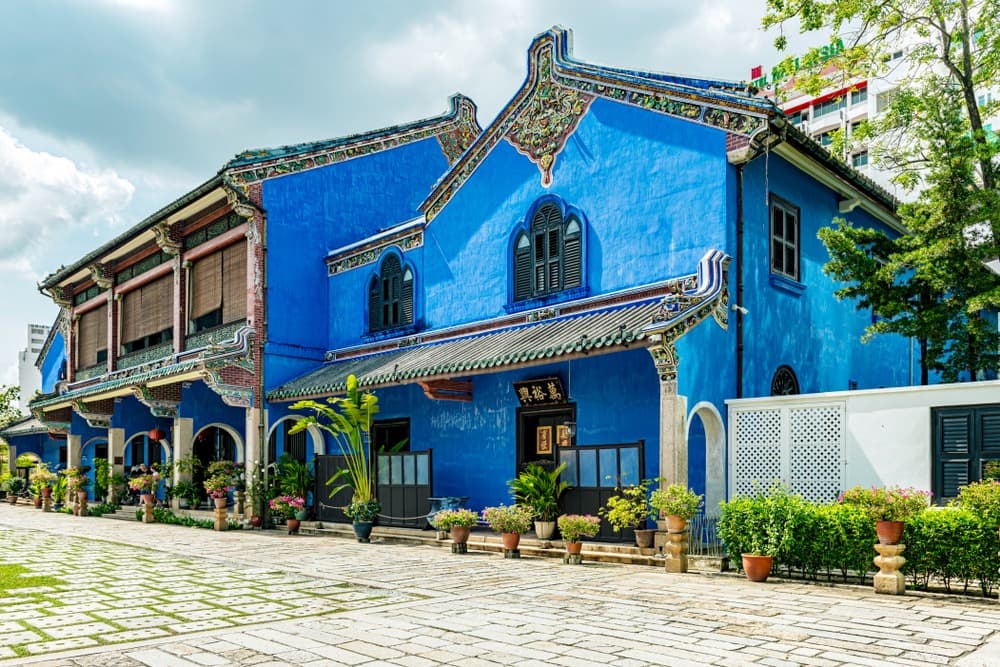
The Blue Mansion of George Town, once the residence of Chinese tycoon Cheong Fatt Tze, is today a hotel-museum listed as a UNESCO World Heritage site in Penang.
The Cheong Fatt Tze Mansion, nicknamed The Blue Mansion for its indigo façade, is one of the most striking heritage residences in George Town, Penang. Once the home of a 19th-century Chinese magnate, it now functions as a hotel-museum and can also be visited on guided tours. The building is part of George Town's historic centre, inscribed as a UNESCO World Heritage site since 2008.
Why visit the Cheong Fatt Tze Mansion
The appeal of the house lies in three combined elements. First, its architecture: it is one of the best-preserved examples of a traditional Chinese courtyard house outside China, featuring 38 rooms, 5 interior courtyards, 7 carved staircases and 220 windows. Next, its history: the mansion narrowly escaped demolition in the second half of the 20th century before being purchased and restored by a group of Penang residents. Finally, its role in George Town's urban narrative, which it helps illuminate as a crossroads of Chinese, Malay and British colonial cultures.
The central courtyard, organized according to feng shui principles where "the wind meets the water," concretely illustrates classical Chinese architectural thinking. For travellers interested in Peranakan heritage and the history of Chinese diasporas in Southeast Asia, it is a difficult site to bypass.
History of the house and Cheong Fatt Tze
Cheong Fatt Tze (1840-1916) was a Chinese businessman from Guangdong who left as a teenager for Southeast Asia, where he built a fortune in trade, banking and plantations. His network of activities stretched from Sumatra to Hong Kong. The Western press of the time sometimes nicknamed him "the Rockefeller of the East." The Leith Street mansion, built in the late 1890s, served as both his personal residence and his regional business headquarters.
Chinese imperial style predominates, with borrowings from British colonial architecture and Peranakan craftsmanship: ceramic tiles, Scottish ironwork, Chinese glazed tiles. After Cheong Fatt Tze's death, the house passed through several hands and gradually fell into disrepair. In the 1990s, a group of local investors purchased it and undertook heritage restoration that won several international accolades. This operation contributed to the momentum that led, in 2008, to the inscription of George Town's historic centre as a UNESCO World Heritage site, jointly with Malacca.
What to see and do
Architecture and courtyards
The tour emphasizes the sequence of spaces: reception hall, central courtyard, side wings, upper gallery level. The east wing is traditionally associated with the feminine, the west wing with the masculine, consistent with the house's symbolic organization.
The hotel-museum and its rooms
The mansion has 18 rooms divided into several categories, each themed around aspects of Cheong Fatt Tze's life and passions:
- Ming Collection: direct access to the pool and oriental garden, furniture that belonged to the family.
- Liang Collection: medium-sized rooms located in the east or west wing, on the ground floor or upper level.
- Tang Collection: two rooms only, near the spiral staircases, equipped with jacuzzis.
- Han Suites: corner suites with sitting room, master bedroom and freestanding bathtub, suitable for families.
Dining
The Indigo restaurant, on the first floor, is run by chef Kim Hock Su, trained at Le Cordon Bleu in Sydney and experienced in the kitchens of Tetsuya's and Quay. His menu blends European techniques with Asian ingredients. The Café Mangga, set beneath a century-old mango tree, offers simpler fare during the day and occasionally features live music in the evenings. A bar completes the offering for residents and visitors.
Practical information
- Guided tours: two sessions daily, in English, lasting approximately 45 minutes, maximum 24 people per group. Online booking recommended, especially during peak season.
- Audio tour: available during daytime via the SmartGuide app, in small groups of maximum 10 people, at your own pace. Bring your own headphones.
- Duration of visit: allow 45 minutes to 1 hour for a guided tour, slightly more for an audio tour if you take time to explore the second-floor exhibitions.
- Admission fees: moderate for the tour, higher for an overnight hotel stay. Contact the establishment directly, as rates change regularly.
The house cannot be visited freely outside of scheduled times: it is an active residence. It's best to plan ahead.
What to see nearby
The Blue Mansion is located within the UNESCO perimeter of George Town, making it easy to move on to other sites in the historic quarter: street art on Lebuh Armenian, clan jetties, Chinese temples and mosques. At the Penang island level, several complementary visits are accessible within half a day:
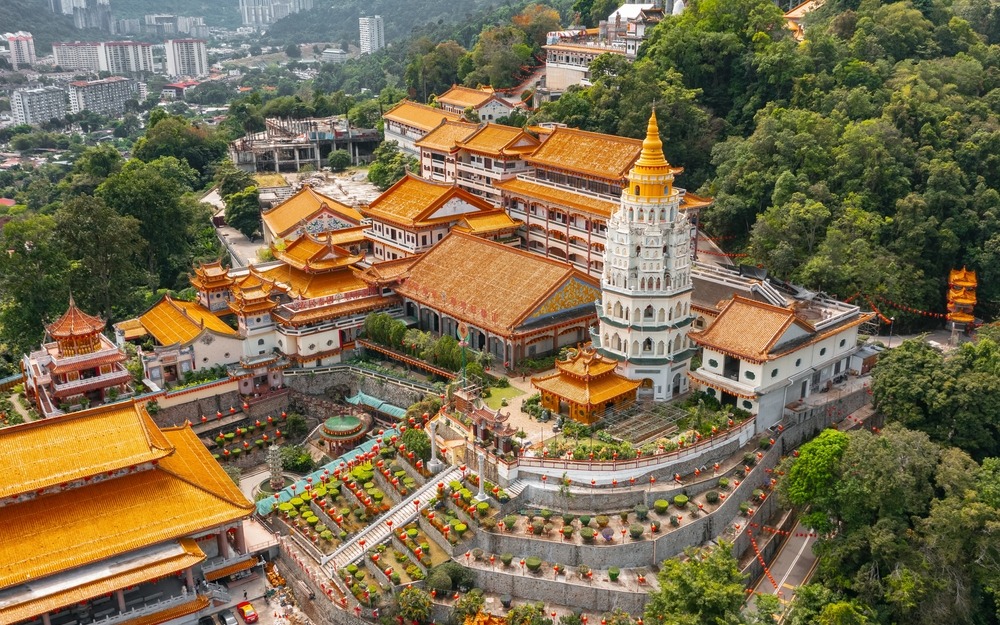
- Kek Lok Si temple, one of the largest Buddhist complexes in Southeast Asia, located at Air Itam.
- A stroll along Gurney Drive, by the seafront, for its evening street food stalls.
- The Tropical Spice Garden, on the island's northwest coast.
To extend your travels beyond Penang, consider Batu Caves near Kuala Lumpur or natural parks in Sarawak such as Bako National Park.
How to get there
The mansion is located at the corner of Leith Street, near Muntri Street, in the heart of the historic centre. It is about 1 km from Komtar bus station, making it accessible on foot from most central accommodation. From Penang International Airport, allow approximately 30 to 45 minutes by taxi or ride-sharing app depending on traffic. The neighbourhood is very walkable; car travel is constrained by congestion and parking.
Frequently asked questions
Frequently asked questions
Planning your trip
The Cheong Fatt Tze Mansion naturally integrates into an itinerary combining Penang, Kuala Lumpur and the east coast or Borneo. To build a customized itinerary, consult our trips to Malaysia.
Nearby
Interested in this visit?
We can include it in your personalised itinerary.